
Introduction
History rarely highlights Black brilliance on European soil but not because it didn’t exist. Across centuries, Black thinkers, artists, leaders, warriors, and scientists have shaped Europe’s identity. Yet these stories were often buried, rewritten, or forgotten and erased by institutions that feared their brilliance.
In this post, we honor 10 extraordinary Black individuals whose footprints transformed Europe. We love to call them trailblazers who dared to exist, lead, and innovate in times of exclusion. Their legacies are not merely historical but they are prophetic, proving that Black presence has always meant Black power.
1. Joseph Bologne (France)
Joseph Bologne (1745–1799), born in Guadeloupe to a French plantation owner and an enslaved African mother, rose to prominence as a virtuoso violinist, composer, military officer, and fencing master. Known as the “Black Mozart,” he led the prestigious Concert des Amateurs, directed at the Paris Opéra before racial pressure from aristocratic ladies blocked his appointment.
Challenges & Triumphs:
Despite his genius, Bologne faced systemic racism, being denied leadership roles. He led France’s first all-Black regiment during the Revolution, refusing public use of his noble title and advocating abolition. His compositions, 12 violin concerti, eight symphony concertantes, six opéras comiques were overshadowed, rumored to have been destroyed due to racial prejudice.0
Legacy:
He pioneered classical music with innovative orchestration and brought Black excellence into European high culture reinforcing Black creativity as sovereign and timeless.
Lessons for Leaders:
- Master your craft relentlessly expertise is your foundation.
- Challenge exclusion strategically; use excellence to unlock opportunity.
- Innovate beyond convention: redefine fields others believe are closed.
2. Mary Seacole (United Kingdom)
Mary Jane Seacole (1805–1881), born in Jamaica to a free Creole mother and Scottish father, learned healing from her herbalist mother. Denied enlistment by Florence Nightingale’s team, she self-funded her trip to Crimea, establishing the “British Hotel” for soldiers suffering in terrible wartime conditions.
Challenges & Triumphs:
Facing sexism and racism, Seacole financed her mission independently and faced initial skepticism. She became beloved by soldiers, managing medical care, hot meals, and emotional support. Her autobiography was the first by a Black woman in Britain, though her legacy was nearly erased until revived in the late 20th century.
Legacy:
Seacole pioneered healthcare outside formal institutions, combining entrepreneurship with compassion. Her efforts helped reshape nursing and demonstrated Black women’s leadership in humanitarian efforts.
Lessons for Leaders:
- Self-fund your vision when systems refuse you access.
- Build empathy-led enterprises that meet real needs.
- Preserve your narrative, document it, share it, and ensure it survives.
3. Kwame Nkrumah (UK/Ghana)
Kwame Nkrumah (1909–1972), an educated student in London, led anti-colonial activism and Pan-African organizing, founding the West African National Secretariat. As Ghana’s first president in 1957, he broke colonial hierarchy, aligned Ghana with socialist progress, and inspired African unity.
Challenges & Triumphs:
Educated in the British system, Nkrumah turned against colonialism, organizing student groups and linking Africa’s freedom struggle with global justice. Post-independence, he focused on industrialization and continental unity but fell to a coup amid economic hardship.
Legacy:
Nkrumah’s insistence on African unity, infrastructure, and economic independence shaped Pan-Africanism globally, thus laying ideological groundwork still followed by African leaders.
Lessons for Leaders:
- Root your work in purpose, not approval.
- Think beyond borders, your vision can reshape systems.
- Build institutions, not positions: structures survive personal defeat.
4. Ira Aldridge (UK/Poland/Germany)
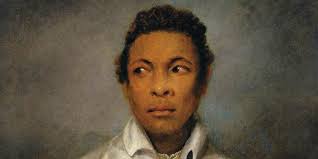
Ira Aldridge (1807–1867), born free in New York, became one of the first Black actors to perform Shakespeare in London. Denied by the U.S., he rose to fame in Europe, touring Poland, Germany, and performing iconic roles, challenging racial stereotypes on the classical European stage.
Challenges & Triumphs:
Confronted with racial exotification, Aldridge became known as “the African Roscius” and was praised for his talent across cultures. European royalty attended his shows—yet, racial prejudice dogged his life. He married and raised family abroad, teaching in London until his sudden death.
Legacy:
He redefined Black dignity in European arts, proving Black male intellectual and emotional depth on classical stages.
Lessons for Leaders:
- Excel in excluded spaces, use your talents as proof of possibility.
- Adapt culturally without compromising identity.
- Redefine perception: your presence can reshape entire industries.
5. Jean‑Baptiste Belley (France)
Jean‑Baptiste Belley (c.1746–1805), born in Senegal and enslaved in Saint-Domingue (Haiti), survived the Haitian Revolution and became the first Black deputy in France’s National Convention. He forcefully spoke for abolition, condemning colonialism and slavery even as Napoleon reinstated both.
Challenges & Triumphs:
Escaping enslavement, Belley risked his life for inclusion in French politics. Elected by military units in Saint-Domingue, he debated fiercely for Black rights and justice. His defiance of colonial power was radical and dangerous.
Legacy:
He brought Black equity into Europe’s highest legal bodies, a model of political inclusion and human rights advocacy.
Lessons for Leaders:
- Speak truth in the halls of power, however small your representation.
- From personal pain grows public purpose.
- Visibility breaks ceilings.
6. Olive Morris (United Kingdom)
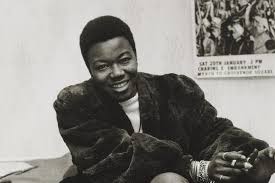
Olive Morris (1952–1979), born in Jamaica and raised in Brixton, London, co-founded the Brixton Black Women’s Group and Organization of Women of African and Asian Descent. She challenged housing injustice, racist policing, and sexism all before turning 27.
Challenges & Triumphs:
Facing racist policing and sexism, Morris helped occupy empty homes, founded self-help spaces, and served as a mother to younger Black women. She drafted critical feminist texts, engaged with unions, and fought for dignity despite systemic suppression. Her early death magnified her impact.
Legacy:
She left a legacy of radical intersectional activism, demonstrating how Black feminism reshapes policy and culture from the grassroots up.
Lessons for Leaders:
- Lead inter-sectionally: women’s liberation is everyone’s freedom.
- Direct action matters.
- Live your values before titles demand them.
7. Alexandre Dumas (France)
Alexandre Dumas (1802–1870), born to a French nobleman and a Haitian mother, defied racial hierarchy to become one of the most popular novelists in Europe. His novels—The Three Musketeers, The Count of Monte Cristo have never been out of print.
Challenges & Triumphs:
He wrestled with colorism and elite bias, but his storytelling genius captivated Europe. He faced legal and personal scandals, yet remained a prolific public figure owning property, navigating financial risk, and advocating for freedom.
Legacy:
He elevated Black heritage through mainstream literature embedding Black DNA into France’s cultural canon.
Lessons for Leaders:
- Use story to shape culture.
- Diversify legacy through enterprise.
- Resilience is creativity’s partner.
8. Phillis Wheatley (UK/US)
Phillis Wheatley (c.1753–1784), kidnapped to Boston at age 8, became the first African American published poet. Her 1773 volume included multiple poems to English aristocracy and George Washington; she visited London, gaining acceptance in elite literary circles.
Challenges & Triumphs:
Despite colonial literacy constraints, her brilliance convinced skeptics; she was validated by English nobles and clergy. After emancipation, economic struggle and illness shortened her life.
Legacy:
She broke intellectual barriers, opening pathways for Black literary expression in British and American culture.
Lessons for Leaders:
- Demand equality through excellence.
- Use your platform to shift norms.
- Success may open doors, but sustain with strategy.
9. Mohamed Amin (UK/Kenya)
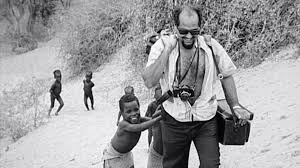
Mohamed Amin (1943–1996), Kenyan photojournalist based in London, captured Ethiopia’s 1984 famine. His images prompted global relief action and reshaped humanitarianism. He later founded Camerapix and trained East Africa’s next generation of filmmakers.
Challenges & Triumphs:
He recorded human agony under threat of violence and criticism. His documentation led to massive global aid. Later, he built African media capacity back home.
Legacy:
He showed how storytelling catalyzes empathy, policy, and power. He proved African voices belong in global media.
Lessons for Leaders:
- Show truth without fear.
- Build local systems, not just foreign dependence.
- Narrative control is political leverage.
10. Cecile Emeke (United Kingdom)
Cecile Emeke, a contemporary filmmaker and writer, produced Strolling, a landmark YouTube series featuring Black women’s lived experiences across Europe, exploring Black identity through intimate dialogue and art. Her work has inspired BBC commissions, TED talks, and academia.
Challenges & Triumphs:
Emeke left corporate life to define Black representation herself, breaking into a white-dominated media industry. Her authenticity opened audiences, funding, mentorship, and reach.
Legacy:
She became a digital pioneer of Black European storytelling, showing how modern tools can democratize narrative.
Lessons for Black Entrepreneurs & Leaders
These trailblazers teach us timeless principles:
- Control your storytelling platforms.
- Show complexity, not stereotypes.
- Use authenticity to unlock influence.
- Mastery unlocks access. Excellence defies restriction.
- Be strategic with platforms. Don’t wait, create your own.
- Document your impact. Stories preserve legacy.
- Align craft with community. Service and success go together.
- Build institutions over personas. Foundations outlast fame.
Their legacies aren’t to be forgotten, they’re roadmaps. Aspiring Black entrepreneurs, activists, creators, and leaders can learn from their courage, innovation, resilience, and vision. Start where they began, claim your space, tell your story, build your system.
Conclusion
These individuals didn’t just pass through Europe but they redefined it. Their names may not appear in textbooks, but they are embedded in the foundations of justice, art, politics, and revolution.
Their silence in history books doesn’t signal insignificance,
it signals systems too afraid to speak their names.
So we’ll speak them louder.