
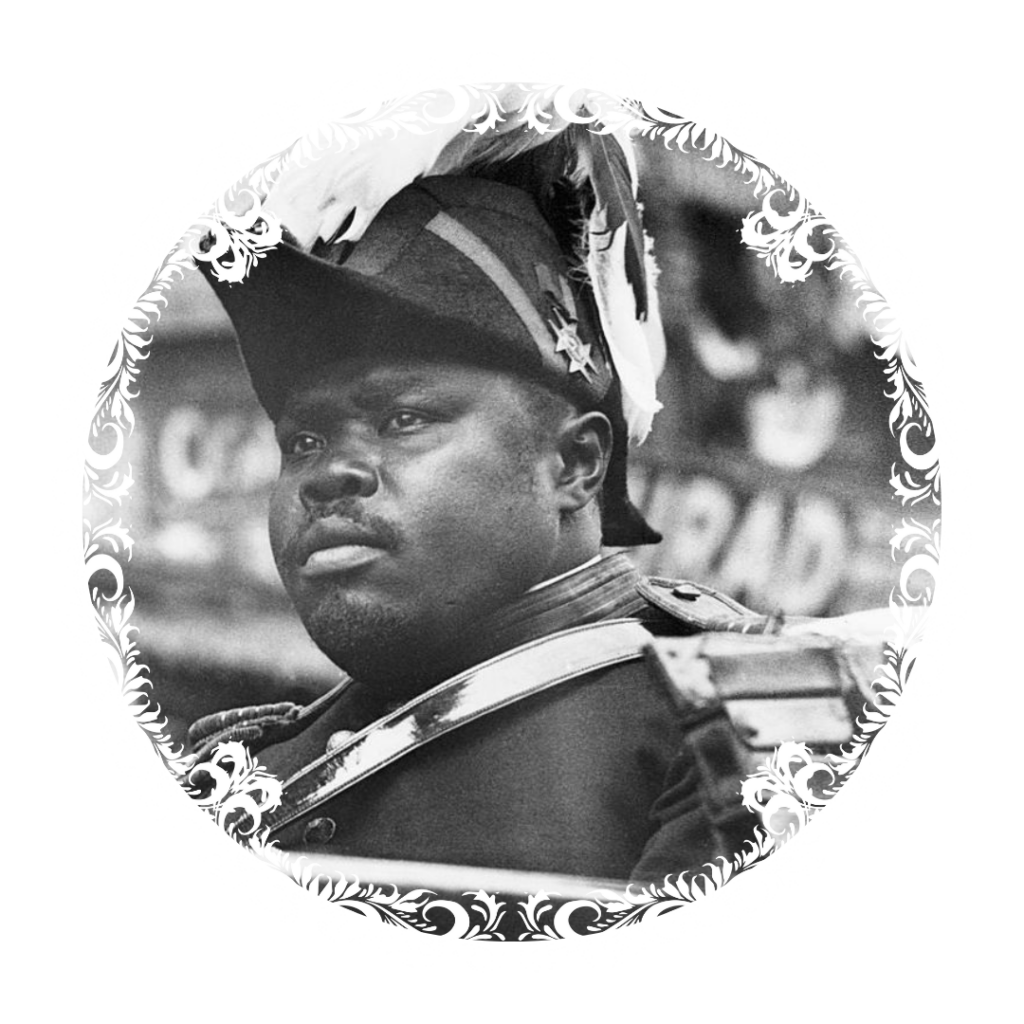
Marcus Garvey: Legacy of Black Revolution
“He didn’t just talk change. He moved nations.”
Introduction: The Man Who Dared to Dream in Bold Colors
What do you get when you mix confidence, courage, and an unapologetic love for the Black race? One name rises above the rest Marcus Mosiah Garvey.
He was born in a world where Blackness was shamed, silenced, and suppressed. But instead of shrinking back, Garvey raised his voice higher. Marcus Garvey was the kind of revolutionary who didn’t need an army, his weapon was ideology, and his battlefield was the global Black experience. He didn’t want revenge. He wanted resurrection for every Black man and woman told they were less.
This article isn’t just a walk through history—it’s a spotlight on the man whose vision is still setting fire to minds today. If you’ve ever doubted your potential because of where you come from or the color of your skin, Garvey’s story is your reminder: you were born to rise.
From Jamaica with Fire: Garvey’s Early Life
Marcus Garvey was born on August 17, 1887, in St. Ann’s Bay, Jamaica, the youngest of eleven children. His father was a well-read stonemason who kept a home library filled with books, and that’s where Marcus first fell in love with knowledge. His mother was a domestic worker, and young Garvey saw the struggles of Black people up close.
At 14, he left school and became a printer’s apprentice. Working in print gave him more than a job, it gave him a tool. The printing press became his pulpit, and paper became his weapon for change.
From Observer to Activist: The Spark of Emancipation
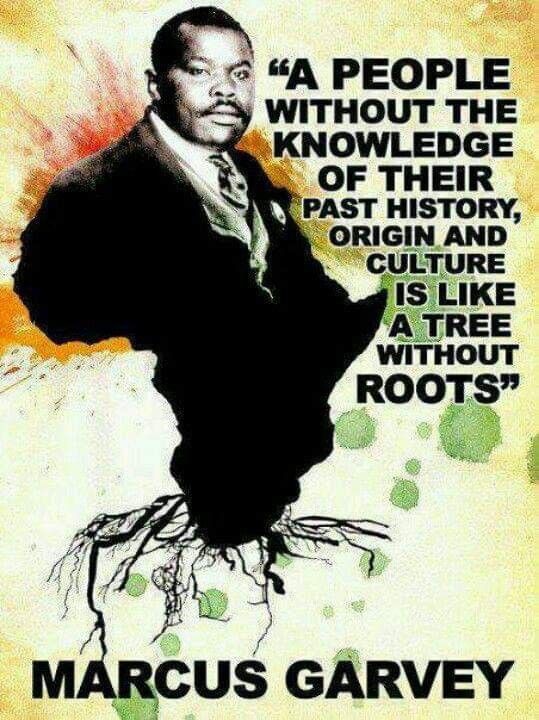
As a young man, Garvey worked in Costa Rica, Panama, and London, where he witnessed one harsh reality across all borders: Black people were everywhere but nowhere. Disrespected. Disregarded. Disconnected.
He began asking a soul-searching question:
“Where is the Black man’s government? Where is his king and his kingdom? Where is his president, his country, his ambassador, his army, his navy, his men of big affairs?”
The answer? Nowhere. So, Garvey made it his mission to build it.
In 1914, inspired by the philosophies of Booker T. Washington, Garvey returned to Jamaica and launched the Universal Negro Improvement Association (UNIA), a global movement dedicated to Black upliftment, unity, and pride.
The goal?
To rebuild the Black race economically, socially, and spiritually. To remind every Black person that they were more than victims—they were visionaries.
The Negro World: Spreading the Fire Worldwide
Garvey knew ideas needed wings. So, he started The Negro World, a weekly newspaper that reached millions across the globe. It was banned in several countries because of its powerful, anti-colonial message—but that didn’t stop it from circulating underground.
It wasn’t just news—it was Black resistance printed in ink.
The Black Star Line: A Ship of Dreams
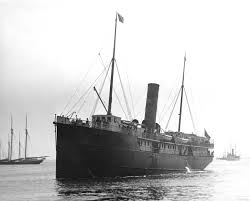
“More than a ship. It was a symbol of sovereignty.”
Now, here’s where Garvey broke the mold.
He didn’t just want to inspire minds; he wanted to move bodies, literally. He established the Black Star Line, a shipping company designed to connect the global African diaspora. The plan was to empower trade and provide safe passage to Africa, a physical link between continents and communities.
But the journey wasn’t smooth.
- The ships were often second-hand and poorly maintained.
- There were allegations of fraud and mismanagement.
- Sabotage was likely, and infiltrators were real.
Still, the Black Star Line remains one of the boldest symbols of Black economic freedom in history.
The U.S. Conspiracy: A Dangerous Dream
By 1920, Garvey’s movement had exploded. The UNIA had millions of followers in over 40 countries. His Pan-African Convention in Harlem drew over 25,000 attendees.
Too big to ignore. Too Black to be accepted.
The U.S. government, under J. Edgar Hoover’s early FBI, targeted Garvey. In 1922, he was arrested and charged with mail fraud, linked to the Black Star Line’s stock sales.
The evidence was shaky, and the trial suspicious. But the message was clear: A free Black man with global influence was a threat.
He was sentenced to 5 years in prison and deported after serving 2 years.
The Sunset of a Visionary: What Happened to the Dream?
After his deportation, Garvey settled back in Jamaica, then later moved to London. His movement lost momentum, partly due to leadership struggles and the massive blow of his imprisonment.
Yet Garvey never stopped writing, speaking, and dreaming.
He died in 1940 in relative obscurity, after suffering a stroke and reading a false newspaper report of his own death. How ironic for a man who gave life to so many minds.
But dreams like his don’t die. They evolve.
Garvey didn’t get to see the fruits of his labor, but his seeds blossomed in the civil rights movements of the 1960s. Leaders like Malcolm X, Kwame Nkrumah, and Martin Luther King Jr. drew from his philosophies.
His words still ring loud:
“Up, you mighty race. You can accomplish what you will.”
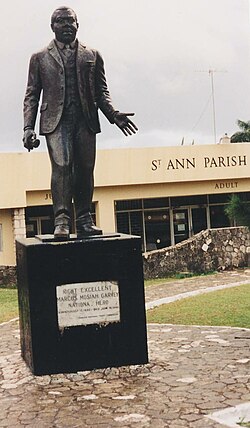
Why Marcus Garvey Matters to LuxAfro and YOU
At LuxAfro, we don’t just honor history, we build on it.
- Garvey’s vision is the root of our mission.
- His defiance echoes in every blog post we write.
- His dream fuels our belief that Black people can thrive, no matter where they live.
His story isn’t about one man; it’s about all of us.
Quick Ways to Keep the Flame Burning:
- Read “Philosophy and Opinions of Marcus Garvey.”
- Join a Pan-African group online or locally.
- Teach your children about Black greatness.
- Support Black-owned businesses.
- Bookmark LuxAfro for weekly sparks of empowerment.
Let’s not just admire Marcus Garvey.
Let’s live like him.
He walked so we could run.
Garvey wasn’t perfect. He was powerful. He wasn’t always right. But he was always righteous in his mission.
Now the torch is in your hands. What will you do with it?