
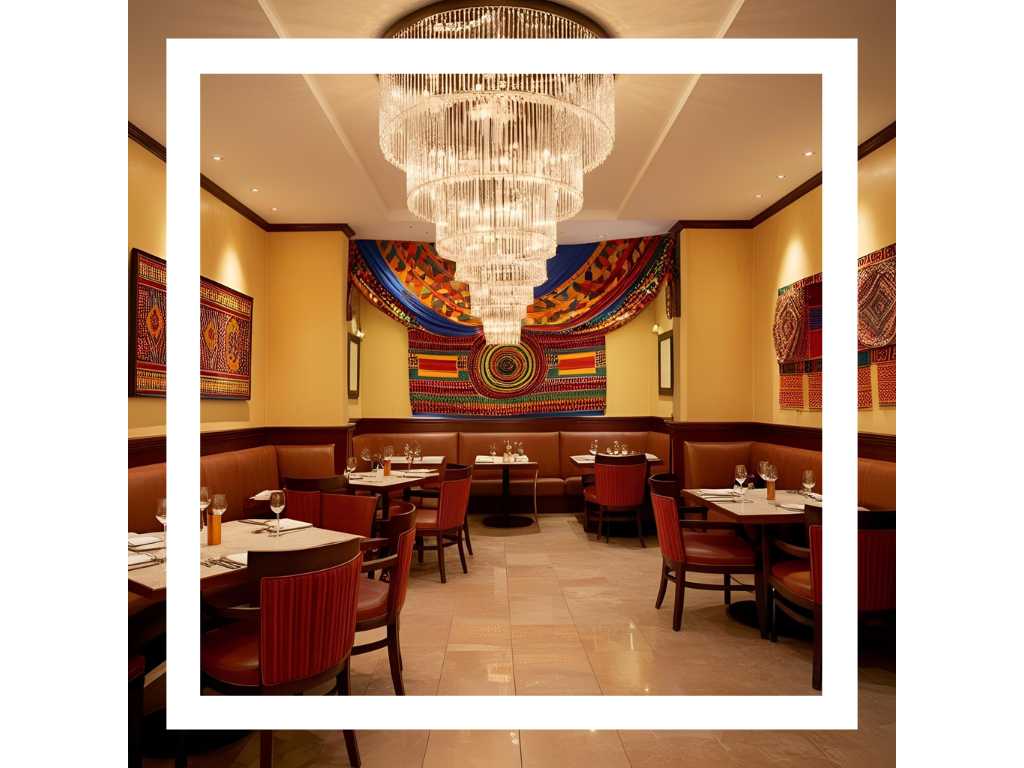
- Introduction: Where we are
- Ambience that speaks: Your restaurant should feel like Africa
- Menu presentation: From food list to cultural showcase
- Websites that work
- Cultural Décor: Let the space speak before the food does
- Food presentation: Stop underrating what the eyes can taste
- Excellent Service
- Cultural Depth: Sell more than just a plate
- The role of innovation
- Hygiene and Presentation
- Branding and identity
- Conclusion
Introduction
African restaurants in Europe often have the heart, the flavor, and the soul, but still lag in presentation, structure, and customer experience. Why?
Because many were built for survival, not for influence.
Today, the mission is different. We’re not here just to serve jollof rice, we’re here to serve legacy. We need to look into what needs fixing and how we can fix it with purpose, precision, and a little cultural pride and heritage.
In all honesty, some African restaurants struggle to stand out because of the following:
- Poor branding
- Cluttered menus
- Inconsistent service
- Uninviting interiors
- Weak online presence
What we have observed is that this isn’t just a business issue but a reputation issue. And if we’re serious about revolutionizing Black-owned spaces in Europe, we have to let go of mediocrity.
This article suggest ways African restaurants in Europe can stand out and things they can do differently to achieve that but still keeping the dream of the African heritage.
1. Ambience That Speaks: Your Restaurant Should Feel Like Africa, Not Just Smell Like It
When people walk into your restaurant, what do they feel? Pride or pity? Curiosity or confusion?
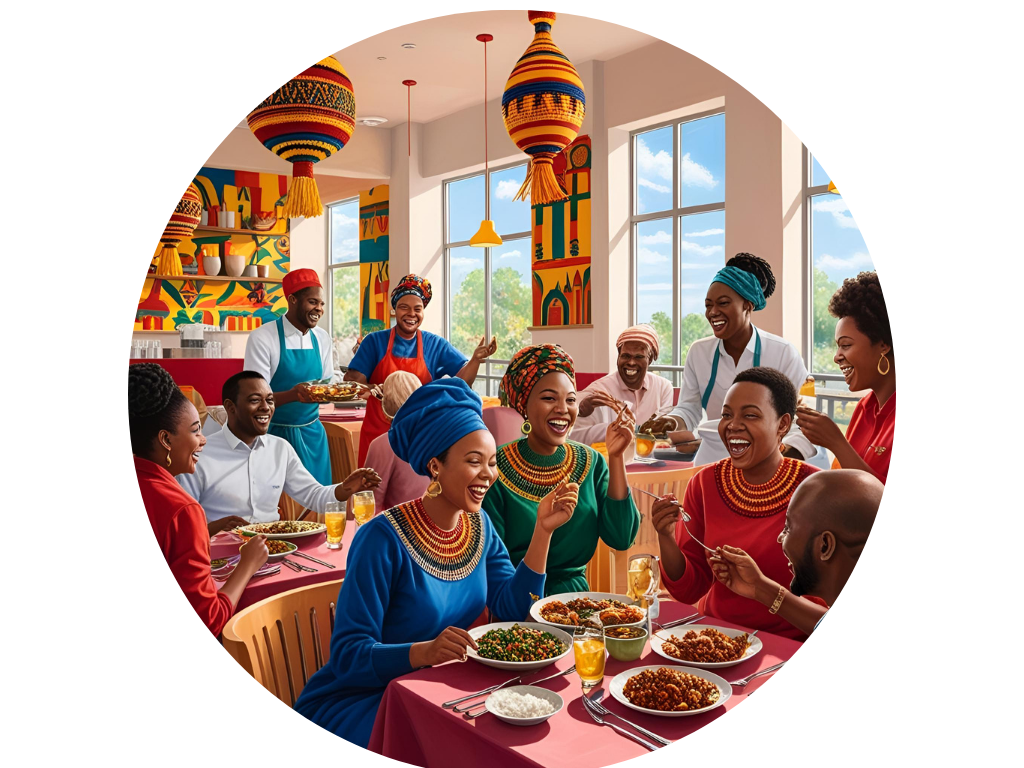
Too many African spots in Europe have uninspiring interiors. Plastic chairs, clashing curtains, and a TV blasting news from home don’t cut it anymore. You’re not just selling food you’re offering a full-body experience. Ambience is storytelling without words. Instead of the boring old ways of doing things, do these instead.
- Use African woodwork and fabrics as part of your furniture and wall decor.
- Invest in soft, ambient lighting with warm tones and ditch those harsh white bulbs.
- Install calm traditional or Afro-soul background music (live if possible).
- Create designated selfie/photo corners using African prints, quotes, and backdrops.
- Use subtle but rich scent diffusers to give off aromas of Africa (think cloves, cinnamon, or baobab).
The Vibe Check: Your restaurant should awaken pride. Not just for Africans but even for Europeans walking in, thinking, “Wow, so *this* is Africa?”
2. Menu Presentation: From Food List to Cultural Showcase
Your menu is your silent salesman. So why are so many menus still looking like school projects?
Don’t you know that Black excellence demands black elegance? That includes your food list. Don’t just list dishes. Tell stories. Inspire cravings. Invite people to understand where the food comes from and why it matters.
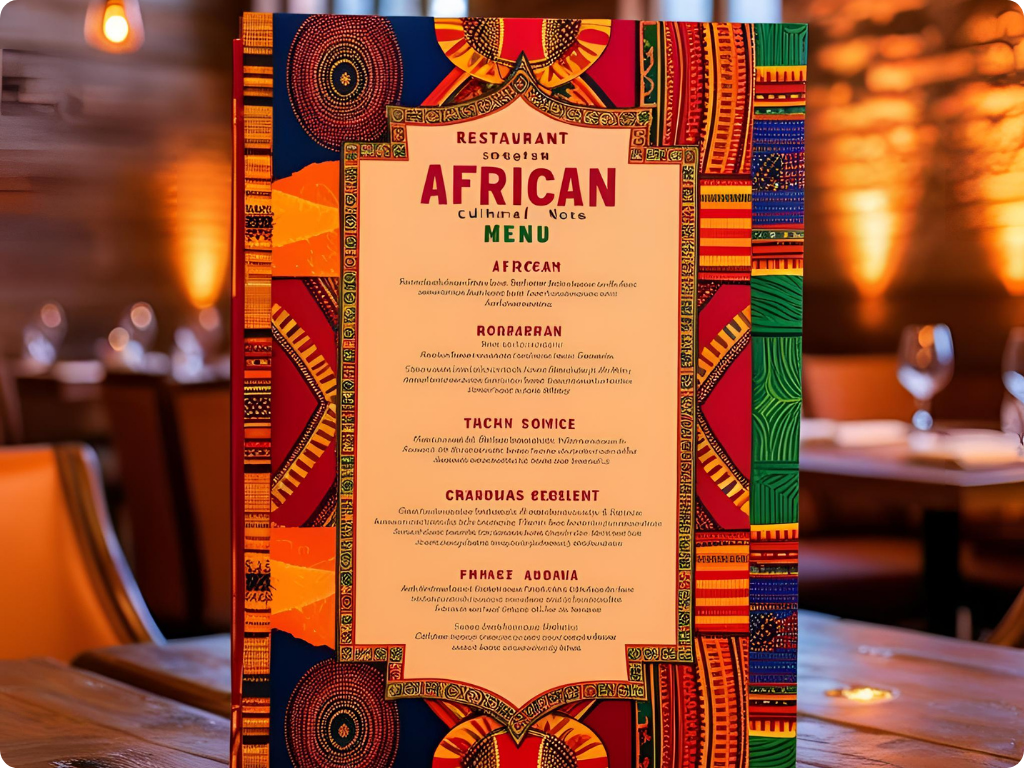
- Design menus with clean fonts, cultural colors, and high-resolution food images.
- Add the cultural background for each dish (e.g., “Moi Moi – Popular in Yoruba ceremonies…”).
- Include both local names and European translations, so everyone understands what they’re ordering.
- Offer a QR code menu for mobile users and online audiences.
Hold this Message to your heart: Your menu is not just a paper. It’s a passport. Let every page reflect prestige, pride, and the power of our cuisine.
3. Website That Works: Your Digital Door Must Be Beautiful
First impressions now happen online. So, if your website looks like it was built during the Nokia 3310 era, that’s a red flag.
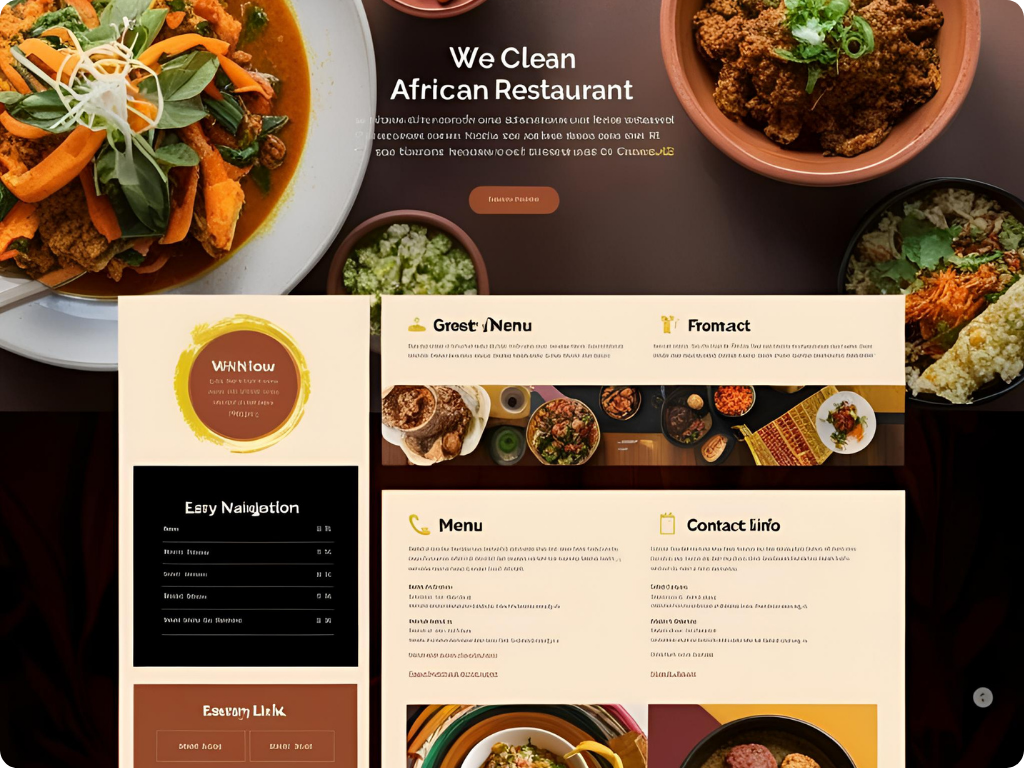
Nowadays, people check websites before trying a new restaurant. They want to book tables, explore your meals, or even host events. A poorly made site makes you look unserious even if your food is fire.
So here’s how you can use your website to attract the right audience, you website must put these into consideration:
- Responsiveness: It must look good and work fast on phone, tablet, and desktop.
- High-quality visuals: Showcase your dishes, décor, and team because this builds trust.
- Integrated booking system: Let people reserve without calling.
- Multi-language support: At least English and German, possibly French if in multilingual areas.
- SEO blog: Share African recipes, cultural facts, event recaps to improve search rankings.
Real Talk: Don’t just rely on Instagram. If someone Googles “African Restaurant in Berlin” and your site doesn’t show up, are you even in the game? Ask yourself again king. Are you?
4. Cultural Decor: Let the Space Speak Before the Food Does
Before they smell the Egusi, they see the walls right?
Yet, many restaurants still treat décor like an afterthought. But décor is culture you can see, and it should start conversations before the waiter arrives. Now you may ask how that’s even possible but then you can take advantage of the following,
- Handcrafted tribal masks, spears, or wooden sculptures as centerpieces.
- Mural walls showing African cities, famous markets, or key historical figures.
- Traditional fabrics like Kente, Adire, or Shweshwe used in upholstery or curtains.
- African proverbs painted across the walls or on ceiling borders.
- Tablecloths made from Ankara or Bogolanfini (mud cloth) material.
Bottom Line: People should feel like they’ve walked into a living museum of Africa—not just a place to grab a quick plate.
5. Food Presentation: Stop Underrating What the Eyes Can Taste
Yes, the food tastes amazing. But does it look amazing?
See, too many African dishes in Europe are served anyhow, with zero plating finesse. But if we want to compete on a global scale, presentation can’t be optional. Even pepper soup can look like royalty with the right plating.
- Use modern, minimalist plates, white or wooden styles make our food colors pop.
- Avoid overcrowding the plate. Let each component breathe visually.
- Add garnishes like parsley, edible flowers, or lemon twists.
- Consider using traditional items (like banana leaves or mini calabash bowls) for specific meals.
- Serve sauces in small glass containers or ramekins, not just poured over everything.
Truth Bomb: A well-presented plate is more likely to go viral. And in 2025, your next customer might come from a single photo. Feed the eyes before the mouth.
6. Excellent Service: It’s Not Just the Food, It’s the Feel
Let me tell you a secret, some African restaurants in Europe nail the flavor but miss the finesse. The food slaps, but the vibe? Not so much. And in a place like Germany where service standards are high, Black-owned restaurants can’t afford to be “just okay.”
This is about more than food. It’s about experience. It’s about dignity. It’s about presentation. Because when people dine out, they’re not just buying jollof or egusi, they’re buying how it made them feel.

Here’s how you take it from average to unforgettable:
- Train your staff in hospitality, not just food service. Let them greet guests warmly, explain the dishes like storytellers, and guide the experience.
- Educate your team on the cultural significance of each dish. Every meal has a story teach them to tell it.
- Offer thoughtful pairings. What juice or wine complements that suya or okra soup? Recommend it.
- Build loyalty through memory. Recognize returning guests. Make them feel like family.
- Handle complaints with grace. Don’t get defensive, get better. criticism should not make you bitter.
Closing thought:
Your food feeds the stomach, but your service feeds the soul. If your guests leave full but uninspired, you’ve missed the point. Let your service scream excellence. That’s how you build loyal tribes, not just customer lists.
7. Cultural Depth: Sell More Than Just a Plate
Food isn’t just about taste, it’s a passport to identity. When people step into your restaurant, they’re not just looking for “rice and stew,” they want to experience the heart of Africa. The smell, the story behind the dish, the music in the background it all matters.
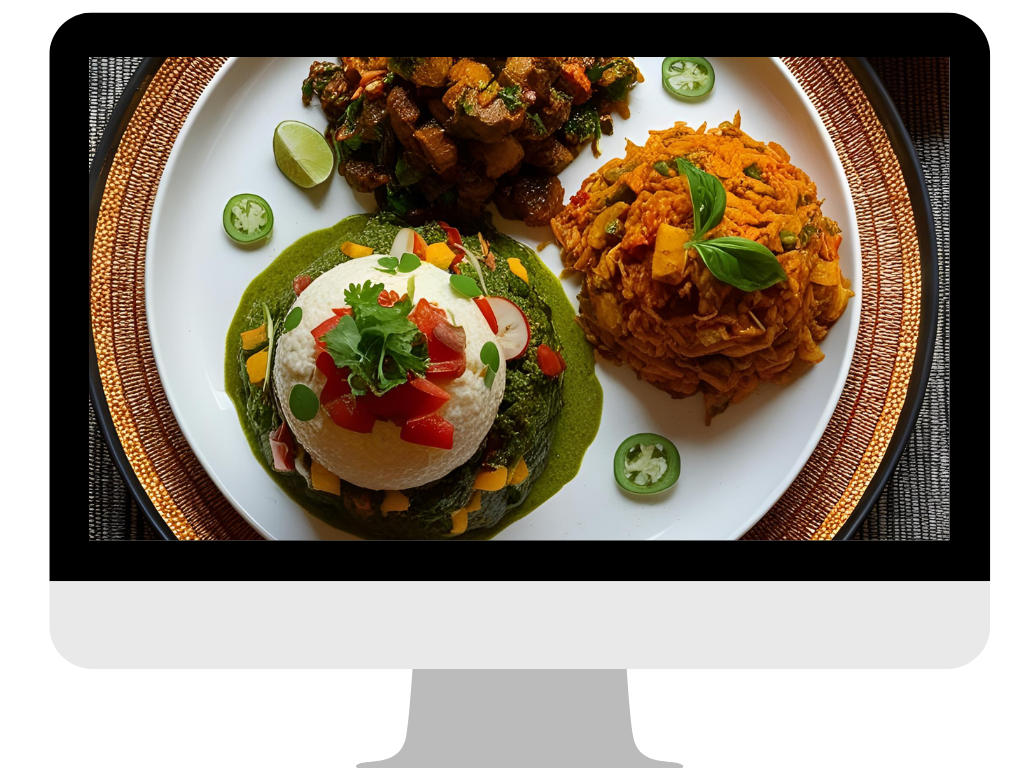
So don’t just serve food, serve heritage. Give your customers a reason to brag about their experience.
Ideas to Inject Cultural Storytelling:
- Add stories or history next to each meal on the menu (e.g. “Afang Soup – popular among the Calabars, served at weddings and naming ceremonies.”).
- Play Afrobeat or traditional music softly in the background to create a vibe.
- Use traditional proverbs or quotes on the walls or table napkins.
- Have a “Dish of the Month” from a specific region and tell a short story about it.
- Organize “Culture Nights” where you share traditions and let customers dress in African attire.
When people taste your food, let them taste home even if they’ve never been to Africa.
8. The role of Innovation: The Future is Not in the Past
Yes, we love tradition. But tradition without innovation becomes a limitation.
The truth is: Many African restaurants have been doing the same things for 10 years and expecting a different result. If you want to scale, you must evolve.
Innovative Moves That Make You Stand Out:
- Introduce Afro-fusion dishes (e.g., Jollof Arancini, Efo stir-fry, or Akara sliders).
- Offer pre-packed meal plans or subscription services for weekly African dishes.
- Partner with African beverage brands to create a fuller cultural experience (e.g., Zobo cocktails, Palm wine spritzers).
- Implement loyalty cards or QR codes that allow customers to collect points.
- Embrace delivery tech; create an app or partner with food delivery platforms.
You can respect tradition without being stuck in it. Culture is not static: it evolves, and so should your business.
9. Hygiene and Presentation: Cleanliness is Culture
Let’s be blunt, a number of our restaurants are not clean. And that’s not just hurting your reputation; it’s an attack on the brand of Africa as a whole.
A dirty restroom, a sticky table, or unkempt staff clothing sends the wrong message. You can’t claim to be classy if your kitchen tells a different story.
Cleanliness + Class = Trust. Here’s how to fix it:
- Deep clean your restaurant every week. No compromise.
- Make sure your staff look presentable. Uniforms = unity.
- Scent matters. Use air fresheners and ventilation wisely.
- Always ensure toilets are stocked, sparkling, and regularly checked.
- Use minimalist but classy presentation styles for your meals.
Cleanliness isn’t “white people’s standard”, it’s a global standard. Respect your space and your customers will respect your brand.
10. Branding and Identity: Own Your Space Proudly
Your branding should scream African excellence, not make excuses. Don’t settle for generic logos, blurry images, and vague slogans. If your visuals don’t match your passion, customers won’t either.
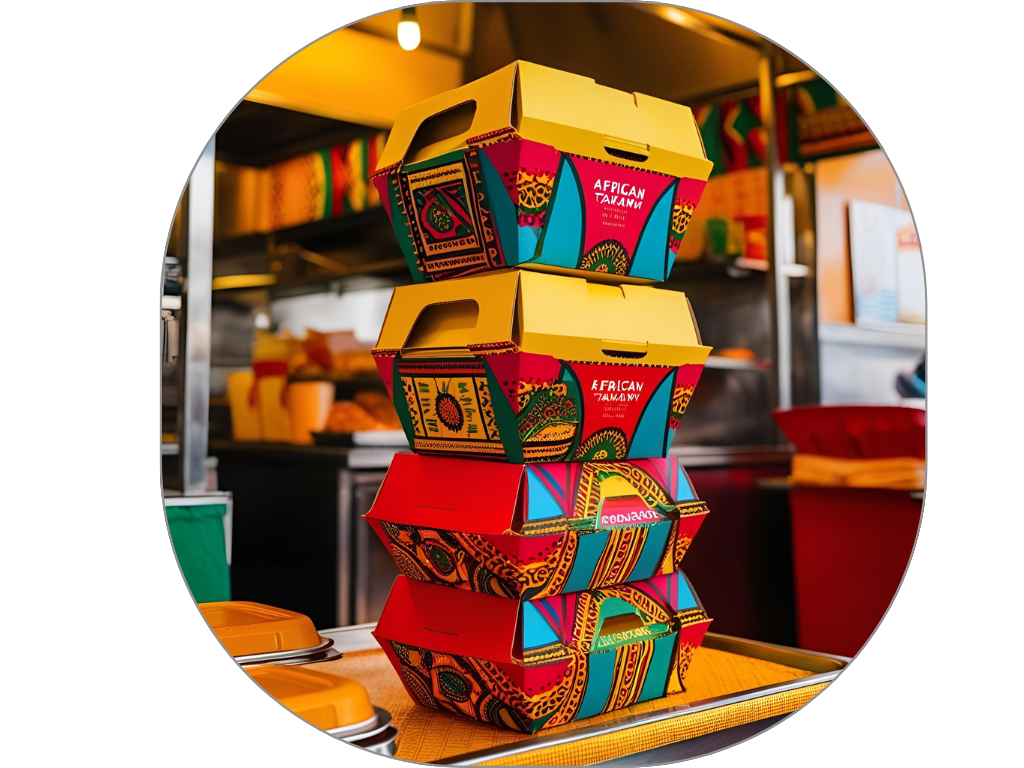
Branding That Elevates You:
- Use a professional logo and color palette that reflects African vibrancy.
- Work with a designer to create consistent visual identity (menus, packaging, signage).
- Create a catchy tagline that reflects your value (e.g., “Africa on a Plate”, “Taste the Roots”, “Bold Bites from the Motherland”).
- Don’t underestimate packaging please. Get custom takeaway boxes, utensils, and stickers.
- Be bold with your Instagram and Google page. These are your storefronts too.
Stop hiding behind “we’re just starting small.” Small doesn’t mean scattered. Even a kiosk can look royal when it’s branded with pride.
Conclusion
Final Call: Don’t Just Run a Restaurant. Start a Cultural Movement.
If you’re a Black entrepreneur running an African restaurant in Germany or anywhere in Europe—you’re not just running a business.
You’re representing a people. You’re telling a story. You’re holding the torch of a legacy that must burn brighter than ever.
But here’s the hard truth: mediocre effort produces mediocre respect. Europe doesn’t owe you anything, but you owe yourself excellence. This is not about begging to belong. It’s about building to dominate.
So, from your menu to your music, from your service style to your scented bathrooms let every inch of your restaurant whisper what the world must hear loudly:
“We are here. We are excellent. And we are unapologetically African.”