
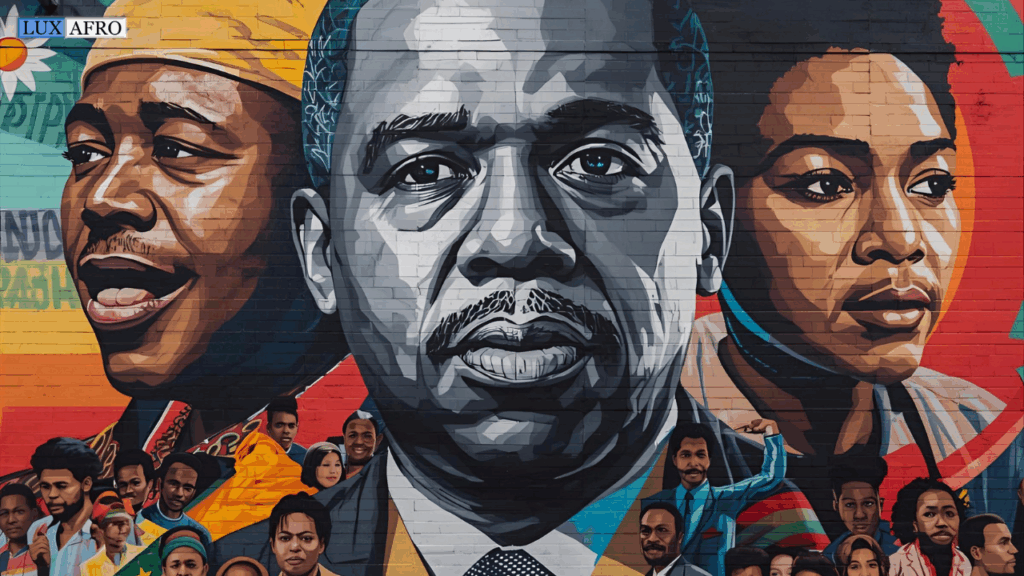
“Where Are the Black Leaders? Data-driven insights on Black leadership gaps and success metrics.”
Recent data from 2024 and early 2025 confirms what many have long felt: a broken pipeline continues to fail Black professionals. In the UK, there are still zero Black CEOs in the FTSE 100, while Black talent holds just 1.2% of senior management roles. This is not merely a numbers game, it reflects years of systemic exclusion, missed mentorship opportunities, and the invisible glass ceiling that Black professionals are expected to navigate without support.
Germany paints a similarly harsh picture. Over 54% of sub-Saharan Black professionals report workplace harassment, creating a hostile environment that pushes potential leaders into silence or early exits. Even in countries like South Africa, where Black people make up the vast majority, white professionals still dominate executive roles, with only 15% of top CEOs being Black.
This doesn’t just happen only in the corporate world. Leadership gaps exist in law enforcement, sports management, public service, and education. These aren’t mere gaps they’re gaping voids, caused by legacy systems that weren’t designed for Black leadership to thrive.
Data however doesn’t only reveal the problem. It highlights the urgency and opportunity for a new generation of leadership-focused solutions.
We believe data is not just for dashboards, it’s for action.
| Region / Context | Black Population % | Black Representation in Leadership Roles | Notable Facts (2024–2025) | Source |
| UK – FTSE 100 CEOs | ~3% | Zero Black CEOs (2024) | Despite 12 ethnic minority CEOs in FTSE 100, none are Black in 2024. | (fairplaytalks.com, fairplaytalks.com, The Standard) |
| UK – FTSE 100 senior management | ~3% | 1.2% Black executives in FTSE 100 | Lower than UK Black population share. | (fairplaytalks.com, leadership2025.co.uk) |
| UK – Private sector leadership | ~3% | Black professionals hold 1.5% of senior roles | Pipeline gaps persist outside FTSE-listed firms. | (fairplaytalks.com, Personnel Today) |
| Germany / EU – Workplace hostility | Varies | – | 54–76% of Black individuals in Germany report harassment (2023–2024). | (African Courier, DW, FRA) |
| South Africa – CEOs (Top‑40 JSE) | ~80% | Only ~15% of CEOs are Black | White professionals dominate senior business roles despite majority | (spencerstuart.com, Business Insider Africa) |
| South Africa – Corporate management | ~80% | Only ~13.8% of senior management are Black | Despite economic empowerment policies, leadership remains skewed. | (spencerstuart.com, odgers.com) |
| UK – Sports coaching (Premier League) | – | Just 4% of coaching/management roles held by Black individuals | High playing representation not mirrored in leadership roles. | (Global Citizen, fairplaytalks.com) |
Further Insights
- UK Leadership Stagnation: While overall ethnic diversity in FTSE (Financial Times Stock Exchange) boards is improving slowly, Black representation at the most senior levels remains flat or declining, indicating systemic exclusion.
(fairplaytalks.com) - Unseen Barriers in Europe: In Germany and the EU, workplace harassment rates for people of African descent remain alarmingly high between 54–76%, creating invisible barriers to advancement.
(African Courier, DW, FRA) - South Africa’s Talent Paradox: Although policies exist to correct apartheid-era disparities, Black professionals continue to hold a small minority of CEO and senior roles, despite forming a demographic majority.
(spencerstuart.com, odgers.com) - Leadership Gaps in Sports: The imbalance between Black athletes and leadership roles in UK sports is stark, highlighting how pipeline issues extend beyond corporate environments.
(Global Citizen, fairplaytalks.com)

Implications for Leadership
- Representation gaps underscore an urgent need for purpose-driven coaching and leadership development tailored to Black professionals across Europe, Africa, and the UK.
- Cultural nuances matter: Recognizing hostile work environments (e.g. harassment) is critical when designing coaching support that builds resilience and trust.
- Empathy matters in leadership: Turning lived experience into coaching especially around navigating systemic barriers is vital for breaking cycles of underrepresentation.
- At LuxAfro, we see this data as more than statistics, they are maps. Maps that guide how we build brands, platforms, and strategies that prepare Black professionals and creatives to lead, sustain influence, and become visible power nodes in their industries.
Black leaders face significant gaps in representation and opportunities for advancement compared to their white counterparts, particularly in corporate settings. Statistics show a notable underrepresentation of Black individuals, especially women, in leadership positions across various industries. Success metrics for Black leaders are often evaluated differently, and they may encounter systemic barriers like lack of access to development experiences and implicit bias in hiring and promotion.
Gaps in Representation and Opportunities:
- Underrepresentation in Leadership:
Black CEOs are less than 1% of Fortune 500 companies, highlighting a significant gap in top leadership positions.
- Broken Rung Effect:
Black women, in particular, face a “broken rung” in the promotion pipeline, with significantly fewer being promoted to managerial roles compared to men.
- Lack of Access to Development:
Black professionals report being less likely to receive critical development experiences, such as leading major company initiatives, compared to their non-Black peers.
- Discrimination and Bias:
Many Black women feel that their race and ethnicity will make it harder to advance, and a significant percentage perceive discrimination based on race in the workplace.
Challenges in Success Metrics:
- Double Jeopardy Effect:
Black women are often evaluated more harshly than their male and white counterparts, especially under conditions of organizational failure, due to the “double jeopardy” effect.
- Perception as Leaders:
Black individuals are sometimes perceived as less typical leaders than their white counterparts, and Black women may face challenges being perceived as both competent and likable.
- Limited Visibility:
Successes of Black leaders may be overlooked or discounted, contributing to a lack of recognition and advancement opportunities.
- Barriers to Executive Leadership:
Black women face unique hurdles in reaching executive leadership roles, even when they aspire to them.
Here we go, we have the statistics, proven data, and unquestionable insights. So, what do we do with them? Laugh over them or lament as usual, or are we going to be part of the few who decide to take action, just like Luxafro? The choice is absolutely yours, but make the right one.
Be the reason the statistics change in favour of Black people.
Join our community on YouTube and TikTok.