

Black, Tired & Overlooked?
You don’t have to look far to find stress buried beneath the smiles of Black people. A long day at work. Pressure from family. Bills. Isolation. Hyper-productivity. Then silence. That’s how many of us carry stress inward, until it erupts into something bigger.
Across the world, countless Black individuals are walking around with untreated high blood pressure, undiagnosed diabetes, and chronic stress masked as “just being tired.” These are not isolated issues. They are generational threats that quietly destroy lives one stroke, one breakdown, one sugar spike at a time.
These aren’t just medical issues. They’re social and cultural crises. And they’re often invisible because even when we’re hurting, we push through. We show up. We survive but the cost is heavy. By the time a diagnosis is made, damage has often been done. What’s missing isn’t motivation it’s access, knowledge, and community-based wellness support built with us in mind.
That’s where this conversation starts.
What we are saying isn’t about guilt-tripping you over your eating habits or shaming you for stress. It’s about giving you real, practical tools rooted in your reality. Tools that help you take back your body, your mind, and your future.
You’re not lazy. You’re not broken. You’re likely under-supported.
It’s time to change that.
Let’s talk about how we can fight back against these silent killers using food, movement, mindset, and cultural wisdom and how those who’ve found healing can lead others toward better health too.
The Pressure is Real
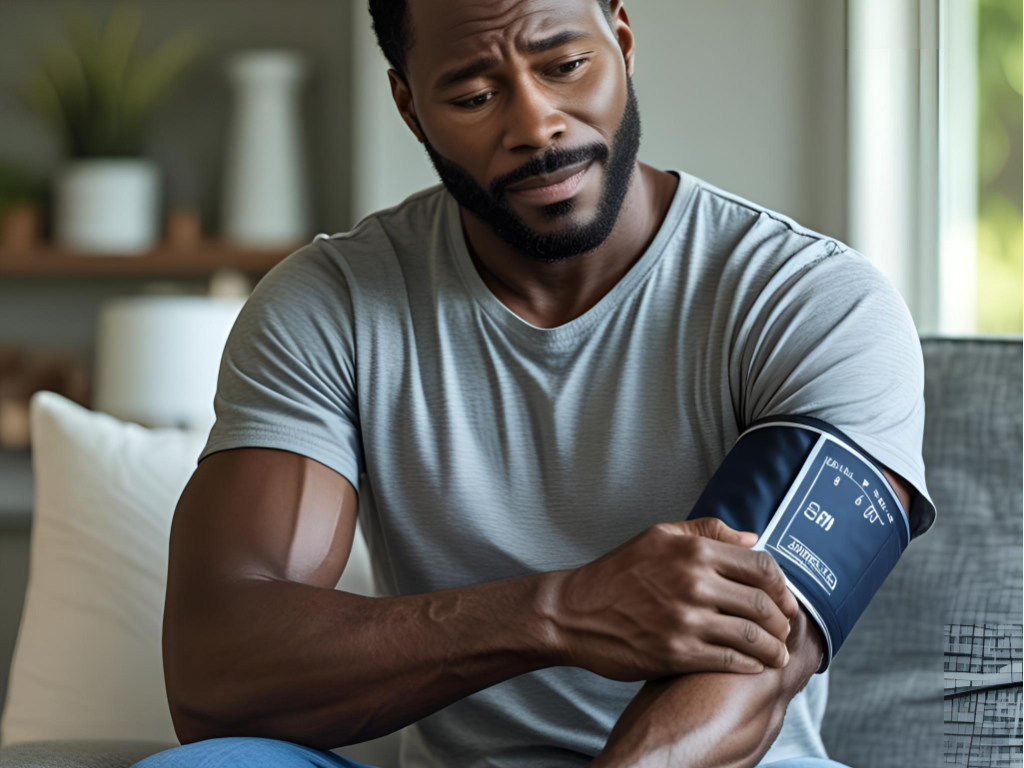
High Blood Pressure in Black Communities even though you may not feel it every day, but it’s there, tightening around the chest, creeping into your sleep, raising your heart rate without warning. High blood pressure is one of the most overlooked threats in Black communities, yet it’s also one of the most preventable. The challenge? It hides behind the hustle.
For many Black people, especially in Europe and the UK, there’s constant pressure to prove, perform, and endure. It’s a weight passed down through generations, often wrapped in silence. Add in processed foods, long commutes, poor sleep, and limited access to culturally sensitive healthcare and you have a recipe for hypertension by 35.
Let’s be honest many don’t even know their numbers. Blood pressure checks aren’t regular. Symptoms are ignored. “I just need to rest,” becomes the excuse for every headache, chest twinge, or dizzy spell. What’s needed isn’t just medical advice it’s cultural awareness and coaching tailored for us.
Understanding how blood pressure works is step one. It’s not just about salt. It’s about how your body responds to stress especially chronic, buried stress. It’s about sleep cycles that are off. It’s about coffee for breakfast and barely hydrating by 4 PM. And yes, it’s about what’s on the plate, but also why it’s on the plate.
This is where health coaching can shift the game. Imagine someone guiding you not judging you through a real-life routine that fits your lifestyle. Teaching you how to lower your blood pressure through small but powerful changes in food, breathing, movement, and mindset. Not forcing foreign routines, but respecting your time, budget, and cultural roots.
For some who’ve already overcome hypertension, this becomes a calling. You’re not just healing you’re now equipped to lead others. It could be weekly check-ins. Wellness groups. Video lessons. Culturally resonant meal guides.
Blood Sugar Blues — Addressing Diabetes Through Culture & Food
Diabetes doesn’t always scream. It whispers. Dry mouth. Fatigue. Blurred vision. A slow-healing cut. For many Black families, it sneaks in quietly until it’s everywhere. Aunties injecting insulin before meals. Uncles with amputations. Cousins “watching their sugar” but not knowing what that really means.
In Black communities across Europe and beyond, Type 2 diabetes is rising not because of weakness, but because of disconnection. Disconnection from the kind of food our bodies need. From time to cook. From traditions that once kept us whole.
There’s no shame in the struggle. Food has always meant more than nourishment. It’s memory. It’s culture. It’s comfort after hard days in unfamiliar places but somewhere between survival and convenience, we lost our nutritional rhythm.
The goal isn’t to abandon beloved meals. It’s to reclaim them. To adjust without erasing. It’s learning to season with herbs, not just cubes. To bake instead of deep-fry sometimes. To include greens that heal, not just fill.
Most diabetes prevention advice is designed for people with time, money, and access. But what about the Black woman managing kids, work, and her own fatigue? What about the student living off meal deals and toast? That’s where coaching that understands the culture comes in.
If you’ve had to learn how to balance your blood sugar, how to eat, move, hydrate, and rest in ways that don’t spike you then your experience has value. You’ve done what many doctors don’t teach: you’ve learned how to live with care. And that knowledge is powerful.
Black health coaches who understand how to combine ancestral food wisdom with modern science are in demand. People need recipes, support, and real stories. They need someone who says, “I’ve been there let me walk you through it.” That’s leadership.
You don’t have to be a certified nutritionist to guide people. You need results, structure, and empathy. From there, you can host group sessions, start a weekly blog, or even create a digital product with meal plans or sugar-lowering tips.
This isn’t about cutting out rice or shaming food. It’s about restoring balance. Rebuilding trust in your body. And then teaching others how to do the same with flavor, soul, and strength.
Stress is Stealing Lives And It’s Still Underrated
You wake up already drained. You push through deadlines, family obligations, and the quiet demand to “keep it together.” By nightfall, the body is buzzing, but the spirit is flat. This isn’t a breakdown. For many Black people, especially those navigating life in Europe or unfamiliar environments, this is just a regular day.
Chronic stress doesn’t always show up as panic attacks or tears. Sometimes, it’s subtle: loss of appetite, shallow breathing, snappy reactions, or mental fatigue that feels permanent. It becomes a silent routine accepted, unmanaged, and deeply harmful.
In the Black community, stress has long been disguised as strength. We’re expected to push through, stay composed, and “be strong for everyone else.” But carrying the weight of expectations, unspoken fears, financial pressure, and invisible micro-aggressions has a cost especially when left unchecked. Over time, stress wears down the immune system, weakens concentration, disrupts sleep, and increases the risk of chronic conditions.
What makes it worse is that stress is often dismissed or downplayed in mainstream healthcare conversations. Yet, it’s the thread that connects so many health problems from hypertension and diabetes to anxiety and poor eating habits. To heal, we have to first recognize that stress isn’t weakness. It’s a signal.
Managing stress isn’t about expensive routines or perfect calm. It’s about returning to yourself. Slowing down. Learning to pause. It’s about creating daily rhythms that bring your nervous system back into balance not for show, but for survival.
That can look like ten minutes of silence before the world wakes up. A walk in the evening. Drinking more water than coffee. Laughing without guilt. Saying no when you mean no. These are not luxuries they are strategies.
If you’ve come to understand how stress impacts your body, your emotions, your habits you have insight others are searching for. When you begin to reset your own nervous system, you develop the language to help someone else do the same. From that space, leadership is born. Leadership rooted in real life, not perfection.
The journey back to wellness begins with acknowledgment. You are not imagining this. You are not alone. And you do not need to earn rest. Your peace matters and so does your power to protect it.
Leading Wellness from Within
Some of the strongest guides are the ones who never planned to lead. They were simply trying to feel better. To sleep through the night without worry. To eat without shame. To breathe without pressure. And yet, somewhere between their breakdown and their healing, they became the friend others turned to for advice.
There’s a shift that happens when you’ve been through something deeply personal and come out with clarity. You no longer just survive you start to pay attention. To yourself. To others. To how many people around you are carrying the same stress, the same blood sugar spikes, the same burnout signs, but don’t know what to call it. Or how to stop it.
That’s the moment the mission begins.
You don’t need a stage. You don’t need perfection. What you need is honesty and structure. The honesty to say, “I’ve walked that road too,” and the structure to help someone else walk it with more ease than you did.
Wellness coaching, especially within Black communities, isn’t a trend. It’s cultural repair. It’s reclaiming joy. And if your story involves healing from high blood pressure, reversing early diabetes, creating your own rhythm of rest then you’re holding a message that matters. One that can become a service. A workshop. A brand.
Start simple. Maybe it’s a blog. A podcast. A weekly Instagram video. The format doesn’t matter as much as the message. And over time, as your story finds language and shape, it grows. It becomes something more.
That’s where tools like Fiverr come in, platforms that let you build outward from your vision. Let’s say you need help hiring someone to help name your coaching brand, to designing your visual identity, to editing your content, you don’t have to do it alone. When the time comes to move beyond content into business, LuxAfro exists for that purpose. We support Black visionaries with websites, brand kits, digital coaching materials, and more. You bring your healing. We help shape it into a platform others can trust.
You don’t need to wait until you feel like an expert. You’ve already survived something powerful. Now it’s time to share it intentionally, beautifully, and boldly.