
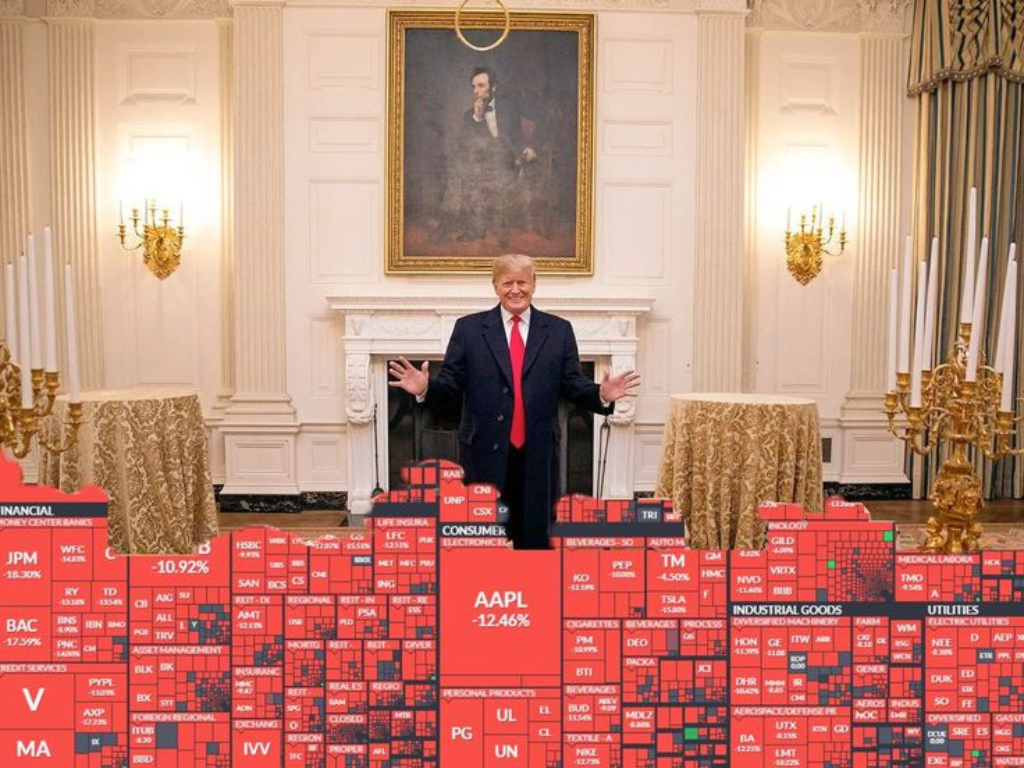
Overview of Donald Trump’s Tariffs and Their General Impact on Black Communities
Introduction: What Are Trump’s Tariffs, and Why Do They Matter?
Tariffs are taxes on imported goods. During his presidency, Donald Trump introduced these to reduce reliance on foreign-made products and promote American manufacturing.
But here’s the kicker: These tariffs didn’t just affect corporations they trickled down.
And often, Black communities already at an economic disadvantage felt the sting more deeply.
- Higher tariffs = higher import costs
- Higher import costs = increased consumer prices
- Increased prices = small Black businesses and families struggling more to survive
Trump’s Trade Policies
Donald Trump’s presidency (2017–2021) was marked by aggressive trade policies, including tariffs on imports from China, the European Union, and other regions. These tariffs were intended to protect American industries but had far-reaching consequences, particularly for Black communities globally.
Key tariffs included:
- 25% on steel and 10% on aluminum imports (2018)
- Up to 25% on $250 billion worth of Chinese goods (2018–2019)
- Threats of auto tariffs on European and Japanese imports
- Objective: Reduce trade deficits and boost domestic manufacturing.
Reality: Retaliatory tariffs and economic disruptions disproportionately affected vulnerable populations, including Black communities.
While some industries benefited from protectionist policies, many Black-owned businesses and consumers faced higher costs and reduced market access.
Who Really Pays the Price?
Corporations? No.
Governments? Not really.
Black consumers and Black-owned businesses? Absolutely.
Here’s how:
- African haircare stores in Europe pay more to import US brands due to tariffs and weaker purchasing power.
- Black farmers in the US face increased cost for equipment parts, seeds, and fertilizers.
- Entrepreneurs in the Caribbean can’t afford new machines or tools because import costs skyrocketed.
- Pan-African tech startups can’t source affordable components from China or America anymore.
Tariffs widen the gap, making it harder for small players to compete with established (often white-owned) businesses who can absorb the cost.
Black people are part of a connected global system. A tariff in the US can:
- Hike up shipping costs in the Caribbean
- Undercut raw material imports in Nigeria
- Force African fashion brands in Paris to charge more
It’s all connected. And many Black entrepreneurs rely heavily on imports for haircare products, clothing, food, tech, you name it.
“When America sneezes, the rest of the world catches a cold. But when you’re Black and in business, you catch pneumonia.”
Economic Consequences of Tariffs on Black Communities
Tariffs often lead to price increases, supply chain disruptions, and job market instability. Black communities, which already face systemic economic disadvantages, were hit harder in several ways:
- Job losses in import-dependent sectors (retail, manufacturing, agriculture).
- Increased costs for Black-owned businesses relying on imported materials.
- Retaliatory tariffs reducing export opportunities for Black entrepreneurs.
A study by the Brookings Institution found that tariffs functioned as a regressive tax, disproportionately affecting lower-income households—many of which are Black.
Global Supply Chain Disruptions and Black Businesses
Black entrepreneurs in the US, Africa, and the Caribbean often depend on global trade networks. Trump’s tariffs disrupted these supply chains, leading to:
- Delays in production due to shortages of imported goods.
- Higher operational costs, squeezing profit margins for small businesses.
- Reduced competitiveness in international markets due to trade wars.
For example, African exporters faced challenges when China (a major trade partner) shifted focus due to US-China tensions.
Consumer Price Increases and Black Households
Tariffs led to inflation in key consumer goods, disproportionately affecting Black families with limited financial flexibility.
- Price hikes in electronics, clothing, and household items.
- Increased food prices due to agricultural tariffs (e.g., soybean trade war with China).
- Strain on disposable income, limiting economic mobility.
Opportunities and Challenges for Black Entrepreneurs
Despite the challenges, some Black businesses found opportunities:
- Local manufacturing incentives led to new ventures in production.
- Increased demand for African and Caribbean alternatives due to strained US-China relations.
- Growth in Black-owned agro-processing firms as global trade dynamics shifted.
However, systemic barriers (access to capital, trade networks) limited widespread benefits.
Final Thoughts:
Trump’s tariffs were a double-edged sword some Black businesses adapted, but many faced heightened economic strain. At Luxafro, we challenge Black communities to leverage these disruptions by building self-sufficient trade networks, investing in local production, and demanding equitable trade policies. The goal is not just survival but economic revolution transforming barriers into opportunities for generational wealth.
The Revolutionary Impact of Trump’s Tariffs on Africa: A Wake-Up Call for Economic Liberation
Africa’s Moment of Reckoning
Trump’s tariffs disrupted global trade, and Africa still tied to colonial-era export models felt the shockwaves. Raw material exporters saw profits drop, while import-dependent nations faced soaring prices. But this crisis exposes a painful truth: Africa’s economy is not built for Africans.
Now is the time to break free. The continent must shift from exporting cheap resources to controlling its own production, trade, and wealth. The revolution starts with economic sovereignty.
Key Points:
- Africa’s raw material exports suffered under U.S. tariffs.
- Import-dependent nations faced inflation and shortages.
- The crisis proves the need for self-sufficient African trade.
- Economic unity is the only path to true liberation.
The world profits from Africa’s weakness but we can turn weakness into strength.
Export Crush: How Tariffs Stifled Africa’s Key Industries
Africa exports cocoa, coffee, and oil but tariffs slashed demand, hurting farmers and miners. In Ghana and Ivory Coast, cocoa prices fell, pushing farmers deeper into poverty. Meanwhile, foreign corporations still profited from Africa’s resources.
The solution? Africa must process its own raw materials. Chocolate factories, textile mills, and refineries will keep wealth on the continent. No more begging for fair trade build it.
Key Points:
- Cocoa, coffee, and oil exports took a major hit.
- Farmers earned less while foreign companies profited.
- Local processing = higher profits and jobs.
- Africa must stop feeding the world and start feeding itself.
The colonizer’s game is rigged. Africa must change the rules.
Import Chaos: Rising Costs & the Squeeze on Black Consumers
Tariffs made imported goods from rice to machinery more expensive. In Nigeria, Kenya, and Senegal, families struggled as prices soared. Why import what Africa can produce?
The answer is simple: Grow our own food, make our own goods, and trade within Africa. Dependency is a choice and Africa must choose freedom.
Key Points:
- Imported staples (wheat, rice) became unaffordable.
- Africa spends billions on food it could grow itself.
- Local farming and manufacturing cut foreign reliance.
- Pan-African trade reduces vulnerability to global shocks.
Remember, a continent that can’t feed itself is not free but we have to use this to our advantage.
China vs. U.S. Trade Wars: Africa Caught in the Crossfire

As the U.S. and China clashed, African nations faced pressure to pick sides. Both powers exploit Africa, China with debt traps, the U.S. with unfair trade.
Africa must reject this false choice. The continent needs balanced partnerships, not masters. The future is African-led trade, not foreign domination.
Key Points:
- U.S. and China use Africa as a battleground.
- Both exploit resources without fair returns.
- Africa must negotiate from strength, not desperation.
- Diversify trade partners no more dependency on one power.
Africa is not a pawn. It’s time to play our own game.
The Rise of Afripreneurs: Local Solutions to Global Shocks
Amid the crisis, African innovators thrived. From Nigeria’s tech startups to Kenya’s homegrown manufacturers, Black entrepreneurs proved Africa doesn’t need handouts it needs opportunity.
Now, governments must back them. Invest in African businesses, not foreign corporations. The future is Black-owned.
Key Points:
- Tech, fashion, and farming startups are rising.
- Local brands replace imported goods.
- African venture capital must fund African ideas.
- Entrepreneurship = the real economic freedom.
Africans building Africa—that’s the revolution.
Pan-African Trade: The Path to Real Independence
AfCFTA (African Continental Free Trade Area) is a game-changer but it must work for the people, not just elites. Africa trades more with Europe than with itself. That must end.
Unite markets, share resources, and build infrastructure. Africa’s wealth must stay in Africa.
Key Points:
- AfCFTA can boost intra-African trade.
- Cut colonial-era borders that hinder progress.
- Build roads, rails, and digital networks to connect Africa.
- One African market = unstoppable power.
Divided, Africa begs. United, Africa dictates.
The Effect of Donald Trump’s Tariffs on Black People in the U.S.
How protectionist policies strained Black livelihoods and sparked new survival strategies
What Are Tariffs and Why Did Trump Push Them?
Tariffs are taxes placed on imported goods, meant to protect domestic industries by making foreign products more expensive. Sounds patriotic, right? But under President Donald Trump, these tariffs especially those placed on global steel were more than just economic tools. They became chess moves in a trade war that echoed through every street, shelf, and shipping dock in America.
Trump’s administration argued the goal was to:
- Revive U.S. manufacturing jobs
- Shrink America’s trade deficit
- Punish unfair foreign practices
But like most policies designed without racial equity in mind, the ripple effect on the Black community wasn’t just an afterthought it became a quiet storm. Why? Because Black workers, business owners, and consumers sit right at the intersection of the economy’s most vulnerable points: low-wage sectors, small business, and urban consumption.
How Tariffs Hit the Black Job Market Harder
At first glance, Trump promised a blue-collar renaissance. But here’s what the numbers really say:
- Steel and Aluminum Tariffs (2018) were supposed to boost factory jobs.
Reality: According to the U.S. Bureau of Labor Statistics, only 5,000 jobs were added in steel between 2018–2019, but over 75,000 jobs were lost in industries that use steel, like auto parts and machinery. - Black workers were overrepresented in vulnerable sectors like retail, transportation, and warehousing all hit hard by rising prices and slowed trade.
The Economic Policy Institute noted that wage growth for Black workers stalled post-2018 in those fields. - Automation trumped tariffs. Even where manufacturing grew, it didn’t bring back human jobs it brought robots. And robots don’t feed Black families.
Key Stats:
- 1 in 5 Black workers are employed in service and supply-chain related jobs (Brookings Institute).
- After tariffs began, imports of auto parts dropped 14%, causing temporary layoffs in Detroit heavily affecting Black workers.
Key Point: The “jobs revival” narrative didn’t reflect the everyday Black worker’s struggle but it widened the inequality gap.
The Squeeze on Black-Owned Businesses
For Black entrepreneurs, Trump’s tariffs were like a double-edged sword: one side slashed their access to affordable goods, and the other side dangled a carrot of domestic pride they couldn’t afford to bite.
- Imported goods became expensive. Many Black-owned businesses especially in fashion, electronics resale, hair and beauty relied on goods from China and other low-cost suppliers.
- “Buy American” became a buzzword, but domestic supply chains were already dominated by large companies. Black businesses couldn’t compete on volume or price.
- Shipping and logistics costs increased by 11% during peak tariff years, according to CNBC, further squeezing product margins.
- Positive Twist? Some Black businesses leaned into “made in America” branding and Afrocentric alternatives, especially in apparel and skincare.
Breakdown:
- 62% of Black small businesses rely on imported materials.
- The average Black-owned firm has six times less startup capital than white-owned firms, limiting their ability to absorb tariff costs.
What it meant: For the average Black entrepreneur, it wasn’t just a trade war it was a survival test in an already hostile economic system.
Consumer Pain: Inflation’s Toll on Black Households
Now let’s talk about the kitchen table. Tariffs don’t just hit businesses they show up in the grocery store, on your kid’s tablet price, and in your utility bills.
- Black households already spend a greater percentage of income on consumer goods. Inflation hits harder when you’re already stretching dollars.
- Prices on electronics, clothes, furniture, and even diapers rose significantly post-tariffs. According to the National Retail Federation:
- The 2019 round of tariffs on $112 billion of Chinese imports raised consumer prices by an average of 5–10%.
- Electronics alone saw a 15% spike.
- The USDA reported higher food prices, especially on soy-based and grain products, due to retaliatory tariffs from China. These price spikes disproportionately affect urban Black neighborhoods already fighting food deserts.
Impact in Numbers:
- Median Black household wealth: $24,000 vs. $188,000 for white households (Federal Reserve, 2019)
- A $3,000/year drop in buying power can be make-or-break for rent, tuition, or groceries.
Takeaway: For Black families, the “America First” tariffs felt like “Black Households Last.”
Policy or Provocation? What It All Means for Black Progress
Let’s call it what it was: a policy without empathy. While some white-owned manufacturing companies celebrated tax breaks and local demand, Black America got higher prices, fewer job prospects, and struggling businesses.
But here’s the power of Black resilience out of every crisis comes creativity:
- Black-owned brands pivoted to Afrocentric self-reliance.
- Community-based buying circles, cooperatives, and local economies emerged.
- Financial literacy and investment movements like “Buy Black” and “Black Wall Street” gained traction.
Still, it begs the question: Why should economic resilience always come from surviving bad policy? What if Black people were included from the start?
Rising Above Economic Setups Meant to Hold Us Down
Trump’s tariffs were a case study in economic neglect dressed up as national pride. And once again, Black communities bore the brunt through job loss, higher prices, and shuttered dreams.
But here’s the twist: even under pressure, we rise.
From creative entrepreneurs to community survival strategies, Black America showed what it means to adapt without surrender. But we can’t keep dancing around broken policies. We need a seat at the policy table, not just a hustle in the streets.
Let this be a rallying cry: We will not just survive trade wars we will build empires in spite of them.
The Revolutionary Impact of Donald Trump’s Tariffs on Black Communities in Europe: A Call to Economic Empowerment
Setting the Stage for Economic Revolution
Donald Trump’s aggressive tariff policies, aimed at protecting U.S. industries, sent shockwaves through global markets including Europe. While mainstream analysis focuses on large corporations and governments, the impact on Black communities in Europe remains overlooked. These tariffs disrupted supply chains, raised prices, and destabilized jobs, disproportionately affecting marginalized groups. Yet, within this crisis lies an opportunity: a chance for Black Europeans to reclaim economic agency, build self-sufficient networks, and ignite a financial revolution.
By understanding these economic shifts, Black communities can turn adversity into empowerment, leveraging collective strength to forge a new path.
Key Points:
- Trump’s tariffs disrupted global trade, indirectly pressuring European economies.
- Black communities, often in precarious economic positions, felt the strain.
- The crisis highlights the need for self-sufficiency and economic unity.
- A revolutionary mindset can transform challenges into opportunities.
The struggle is real, but so is the potential. Black people in Europe must recognize their power not just as consumers, but as creators, innovators, and economic leaders. The time for waiting is over; the time for building is now.
The Ripple Effect of U.S. Tariffs on European Black Businesses
Many Black-owned businesses in Europe, already operating on thin margins, struggled to absorb these price hikes. From African food markets to Caribbean fashion brands, the increased expenses forced some to raise prices, lose customers, or even shut down. This economic pressure revealed the vulnerabilities of Black entrepreneurs in a system not designed for their success.
However, this moment also exposed the need for Black businesses to collaborate rather than compete. The tariffs, though damaging, could be the catalyst for a stronger, interconnected Black economy in Europe one that prioritizes community wealth over corporate profits.
Key Points:
- Tariffs increased costs for Black-owned businesses reliant on imports.
- Many small Black enterprises faced closures or reduced profits.
- Collective economics (e.g., co-ops, bulk buying) can mitigate risks.
- This is an opportunity to build self-sustaining Black business ecosystems.
The road ahead is challenging, but the blueprint for resistance exists. Black business owners must unite, pool resources, and invest in each other’s success.
Increased Cost of Living: How Tariffs Squeeze Black Households
Tariffs on everyday goods drove up consumer prices across Europe. For Black families, many of whom already navigate wage gaps and systemic discrimination, this meant tighter budgets and harder choices. The economic strain was not just financial but psychological, reinforcing feelings of exclusion from mainstream prosperity.
Yet, this hardship can spark a financial awakening. Black communities must embrace alternative models local bartering systems, community savings pools and cooperative buying power.
Key Points:
- Rising prices hit Black households harder due to existing inequalities.
- Traditional coping mechanisms (loans, credit) worsen debt cycles.
- African and Caribbean communal finance models offer solutions.
- Financial education and collective savings can combat economic shocks.
The system wants Black people to stay dependent. But dependence is not destiny. By reclaiming financial wisdom and unity, Black communities can turn survival into superpower.
Trade Wars and Job Insecurity in Black-Dominated Sectors
Trump’s tariffs triggered retaliatory measures from the EU, leading to trade wars that destabilized key industries. Many Black workers in Europe are concentrated in sectors like manufacturing, logistics, and retail areas highly sensitive to trade disruptions. As companies faced higher costs, some cut jobs, reduced hours, or outsourced labor, leaving Black workers vulnerable. This instability deepened existing racial inequalities in employment, where Black Europeans already face higher unemployment rates and workplace discrimination.
Key Points:
- Trade wars led to job cuts in industries with high Black employment.
- Black workers face compounded risks due to systemic workplace biases.
- Worker cooperatives and unions can provide stability and ownership.
- Upskilling and entrepreneurship reduce reliance on exploitative employers.
The system expects Black workers to accept instability. But history shows that when Black people organize, they rewrite the rules. The time has come to move from survival to ownership.
The Hidden Opportunity: Black Entrepreneurship in a Shifting Economy
With certain imported goods becoming more expensive, demand for locally made, culturally relevant alternatives has surged. Black-owned businesses in Europe now have a unique chance to dominate niches like Afro-centric fashion, organic hair care, and African/Caribbean food production industries previously dominated by outside corporations. The key is innovation, collaboration, and leveraging digital platforms to reach global Black audiences.
Key Points:
- Rising import costs create demand for Black-owned local alternatives.
- Culturally specific products (haircare, fashion, food) have untapped potential.
- Digital tools allow Black businesses to bypass traditional gatekeepers.
- Crowdfunding and diaspora investments can fuel large-scale growth.
The global economy was never built for Black success, but that doesn’t mean Black people can’t rebuild it. Entrepreneurship isn’t just an option—it’s the revolution.
Solidarity Across the Diaspora: Building Black Economic Power
Trump’s tariffs proved that economic policies in one nation ripple across the world Black communities must respond with equal force. The African, Caribbean, and Afro-European diasporas must unite to create parallel trade systems. Imagine Black-owned shipping lines, pan-African banking networks, and Europe-wide Black business alliances that bypass exploitative structures. The tools exist; what’s needed is collective will.
Key Points:
- Global Black solidarity can create alternative economic systems.
- Successful models (e.g., Caribbean trade blocs, African fintech) already exist.
- Joint ventures between Black businesses worldwide can replace exploitative trade.
- Cultural influence (music, media, sports) can be leveraged for economic gain.
This isn’t idealism it’s strategy. From the Black Wall Streets of the past to today’s Afrobeats-fueled economic boom, history shows that when Black people control resources, they thrive. The tariffs were a wake-up call: dependency is death. Unity is power.
From Resistance to Economic Liberation
Though Trump’s tariffs were designed to protect U.S. interests, they inadvertently exposed the weaknesses in Europe’s economic system, particularly for Black communities. Yet, in every crisis lies opportunity. Black people in Europe now have a choice: continue relying on a system that exploits them or seize this moment to build self-sufficient, interconnected economies.
Final Rallying Points:
- Organize: Build Black business alliances and worker cooperatives.
- Invest: Redirect spending to Black-owned enterprises.
- Educate: Share financial literacy and ownership strategies.
- Disrupt: Challenge exploitative systems with parallel economies.
The system fears nothing more than Black people realizing their power. Let’s give them something to fear. The economic revolution starts now.
The Revolutionary Impact of Donald Trump’s Tariffs on Black Communities in the Caribbean: A Call to Economic Sovereignty
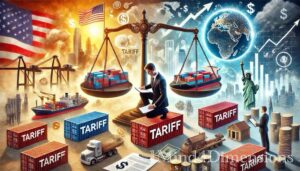
The Caribbean at a Crossroads: Crisis or Opportunity?
When Donald Trump imposed sweeping tariffs on global trade, the Caribbean already economically vulnerable due to colonial legacies and dependence on imports/exports faced devastating consequences. Black communities, who form the majority in the region, bore the brunt of rising costs, lost jobs, and shrinking opportunities.
The Caribbean has always been exploited for its resources while being denied true prosperity. Trump’s tariffs exposed the fragility of relying on foreign markets. Now, the question is: Will Black Caribbean people continue to accept this system, or will they rise to build self-sufficient, interconnected economies? The answer lies in unity, innovation, and a refusal to be collateral damage in global trade wars.
Key Points:
- The Caribbean’s import/export-dependent economy was hit hard by U.S. tariffs.
- Black working-class families faced the sharpest declines in living standards.
- The crisis reveals the need for regional self-sufficiency and economic solidarity.
- This is a historic moment to redefine Caribbean prosperity on Black terms.
The world sees the Caribbean as a playground for tourists and a warehouse for cheap labor but its people have the power to rewrite the narrative. The revolution begins when we stop begging for scraps and start building our own table.
The Collapse of Export Markets: How Tariffs Crushed Key Caribbean Industries
The Caribbean depends heavily on exports bananas, sugar, rum, and textiles many of which faced punishing U.S. tariffs under Trump’s policies. Overnight, farmers and manufacturers saw their profits shrink, forcing layoffs and business closures. In Jamaica, Haiti, and the Dominican Republic, Black farmers and factory workers, already struggling with low wages, were pushed deeper into poverty. The tariffs didn’t just hurt businesses; they destabilized entire communities.
Key Points:
- Key exports (bananas, sugar, rum) became less competitive due to tariffs.
- Black farmers and factory workers lost income and jobs.
- CARICOM trade and local processing can reduce dependency on U.S. markets.
- Value-added industries (e.g., turning sugarcane into premium rum) create wealth.
The colonizer’s game is rigged but the Caribbean can stop playing by their rules. The future lies in self-sufficiency, not subservience.
Rising Costs & Shrinking Incomes: The Daily Struggle for Black Families
With tariffs driving up the cost of imported goods from rice to medicine Black Caribbean families saw their already stretched budgets break. In islands where 60-80% of food is imported, price hikes meant hunger for some and debt for others. Meanwhile, wages stagnated, trapping working-class families in a cycle of struggle.
Key Points:
- Import-dependent islands faced soaring food and fuel prices.
- Working-class Black families were forced into debt or hunger.
- Food sovereignty (local farming, fishing co-ops) is the solution.
- Barter economies and communal support systems can cushion shocks.
The system wants Black Caribbean people to stay beggars but we were once kings and queens of sustainable living. It’s time to return to our roots.
Tourism in Peril: How Trade Wars Weakened the Caribbean’s Largest Employer
Tourism, the Caribbean’s biggest industry, suffered as Trump’s trade wars slowed global travel and weakened currencies. Hotels, vendors, and taxi drivers mostly Black workers saw incomes drop overnight.
But what if Black Caribbean people reclaimed tourism? Instead of serving foreign-owned hotels, workers could build Black-owned eco-lodges, cultural experiences, and community tourism networks. The diaspora’s spending power ($1.3 trillion globally) could be redirected to empower local Black businesses.
Key Points:
- Tourism declines hurt Black workers most (maids, drivers, vendors).
- Foreign-owned resorts extract wealth instead of spreading it.
- Black-owned tourism (homestays, heritage tours) keeps money in the community.
- The diaspora must invest in conscious travel, not exploitative vacations.
Tourism doesn’t have to be neo-colonialism. The Caribbean can welcome visitors on its own terms with Black ownership, fair wages, and cultural pride.
The Hidden Silver Lining: Local Production & Black Entrepreneurship
With imported goods becoming more expensive, Caribbean consumers began seeking local alternatives. Black entrepreneurs stepped up launching farms, beauty brands, and manufacturing startups. In Trinidad, Black-owned agro-processors gained market share. In Haiti, grassroots fashion designers thrived. The crisis forced innovation proving that Caribbean people don’t need foreign goods to prosper.

Now, the task is scaling up. Black business owners must unite, share resources, and demand government support for local industries. The Caribbean should be exporting finished products, not raw materials. The tariffs didn’t just create obstacles they revealed the blueprint for a self-sufficient Black economy.
Key Points:
- Rising import costs created demand for local products.
- Black-owned farms, beauty brands, and manufacturers are rising.
- Cooperatives and joint ventures can strengthen small businesses.
- Governments must prioritize Black entrepreneurs in policy.
The Caribbean’s greatest resource isn’t its beaches it’s its people. Black business is the real economic revolution.
Diaspora Power: How Caribbean Unity Can Overcome Economic Warfare
Millions of Caribbean descendants live abroad, sending over $10 billion in remittances yearly. Instead of just sending cash, what if the diaspora invested in Black Caribbean businesses
This isn’t charity it’s strategy. The diaspora must fund farms, tech startups, and renewable energy projects to break foreign dependency. The tariffs didn’t just divide they showed the power of a united Black economy.
Key Points:
- The diaspora sends billions in remittances it’s time to invest, not just send.
- Digital tools make it easy to fund Black Caribbean businesses globally.
- Joint ventures between diaspora and locals can build resilient industries.
- Economic unity is the only way to resist future trade wars.
The colonizers divided us across oceans but technology and unity can reconnect us. The diaspora must become the Caribbean’s biggest investor.
The Caribbean’s future won’t be decided in Washington or Brussels but in Kingston, Port-au-Prince, and Bridgetown. The revolution is economic. The time is now. Our freedom will be bought by us.
Conclusion: From Crisis to Economic Revolution
Trump’s tariffs exposed Africa’s vulnerabilities but also its power. The continent has the resources, the people, and the brains to thrive.
The only missing piece? The will to break free.
The Blueprint:
✔ Process raw materials in Africa
✔ Grow our own food
✔ Fund African businesses
✔ Trade with Africa first
The world fears a self-sufficient Africa. It’s time to give them a reason to. Economic liberation is the only freedom that lasts.
Trump’s tariffs were an economic attack but the Caribbean’s Black majority has the power to turn crisis into revolution. The solution isn’t begging for fair trade it’s building our own trade. Not waiting for aid but creating wealth. Not fearing the next tariff but making tariffs irrelevant.
The blueprint is clear:
- Grow Our Own Food (end import dependency)
- Own Our Industries (process raw materials locally)
- Control Our Tourism (Black-owned, community-benefiting)
- Unite the Diaspora (invest, don’t just remit)