

The Fight for Equality
Introduction
- Historical Roots of Anti-Blackness in Europe: Beyond Colonialism
- Modern-Day Microaggressions: The Subtle Face of European Racism
- Surveillance & the Criminalization of Black Bodies
- The Media’s Role in Shaping Anti-Black Narratives
- Black European Youth and the Struggle for Identity
- Progress: Black Political Voices and Activism in European Parliaments
- The Rise of Black-Owned Businesses
- New Forms of Solidarity
- Reimagining a Europe Where Black Lives Truly Matter
Introduction
To be Black in Europe is to carry invisible weight. It is to walk streets steeped in colonial legacies while being denied the history that shaped them. It is to contribute to cultures, economies, and movements, while still being asked, “Where are you really from?” In recent years, the global rallying cry of “Black Lives Matter” echoed not just in the U.S., but across London, Paris, Berlin, Amsterdam, and Rome. The message rang clear: Black people in Europe are tired of invisibility, tired of being tokenized, tired of polite racism masked behind liberal smiles.
Europe often prides itself on progressive values, yet its systems have failed millions of Black lives. Discrimination in schools, healthcare, job markets, housing, and policing is well-documented but rarely addressed with urgency. Even in countries without direct colonial histories, anti-Blackness thrives. And while European nations may differ in language, policy, and attitude, the experience of the Black diaspora remains hauntingly familiar: one of marginalization and resistance.
Yet, this is not merely a tale of oppression. Across the continent, Black communities are creating new blueprints for identity, resistance, and growth. They are launching businesses, occupying political spaces, telling their own stories through film, art, and music, and forging transnational solidarity that ignores borders. This article dives deeply into the state of Black lives in Europe not through generalizations, but by peeling back unique layers of this vast, diverse, and often painful landscape.
We will not recycle the usual talking points. Instead, we explore the less obvious yet equally crucial aspects of this fight, from the shaping of youth identity, to the media’s quiet complicity, to the quiet revolution of Black entrepreneurship. Every point you read here is a step toward not just understanding, but transforming, the experience of Black people in Europe.
1. Historical Roots of Anti-Blackness in Europe: Beyond Colonialism
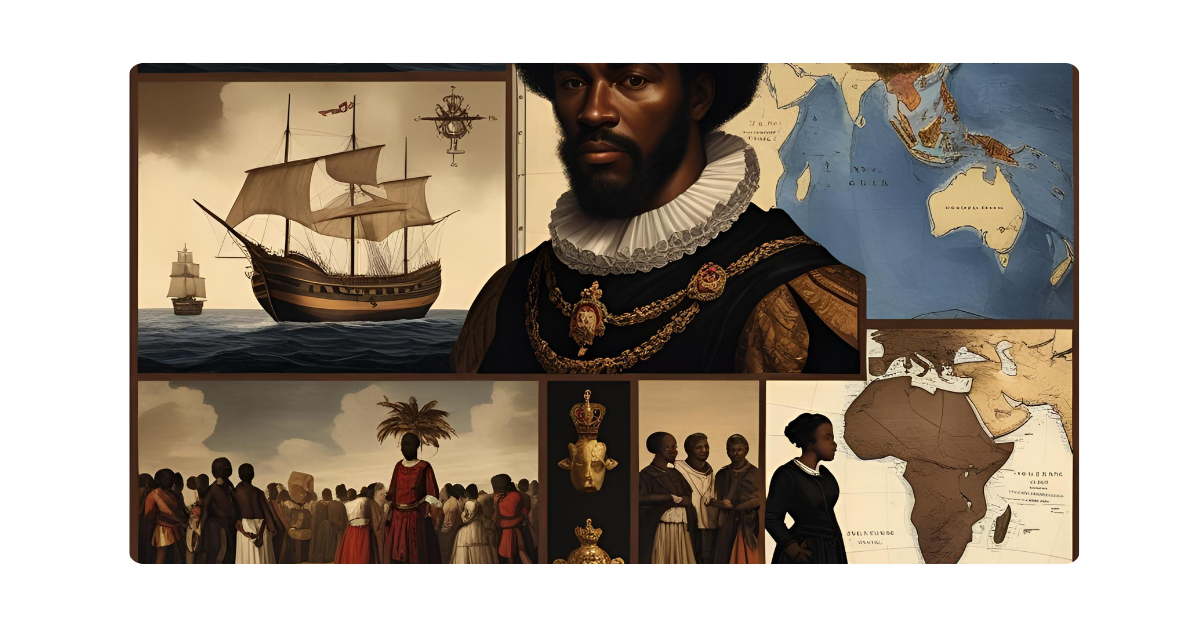
Anti-Blackness in Europe is not solely a byproduct of colonial expansion. It predates the transatlantic slave trade and is interwoven into Europe’s intellectual, religious, and cultural evolution. From the portrayal of Moors in medieval European texts to Black figures being used as exoticized symbols in Renaissance paintings, the Black body was both fetishized and demonized centuries before modern racism was institutionalized.
In the 15th and 16th centuries, Black people lived in European courts as musicians, servants, and sometimes even nobles. But even in relative privilege, they were framed as “the other”, an accessory to white civility. European philosophy and pseudoscience later hardened this divide. Enlightenment thinkers like Hume and Kant, while heralded for modern democracy and reason, wrote blatantly racist commentaries about Black people’s supposed inferiority.
This history matters because it underpins the quiet, embedded racism still operating in European consciousness today. When modern Europeans say, “We’re not like America,” it often masks an unwillingness to confront these deeper prejudices. Racism in Europe isn’t just about police brutality or overt hate crimes, it’s embedded in the very language of superiority, respectability, and historical denial.
By refusing to fully acknowledge this longer historical continuum, Europe avoids accountability. The story of Black lives in Europe is not new. It’s just been whitewashed.
2. Modern-Day Microaggressions: The Subtle Face of European Racism
In a typical Dutch office, a Black professional is asked, “Wow, you speak Dutch so well! Where did you learn it?” In a Paris metro, a Black woman clutches her bag while everyone else pretends not to stare. These aren’t overt slurs or violent acts. These are microaggressions, subtle, insidious behaviors that convey Black people don’t fully belong in European society.

European racism is often passive-aggressive. It’s wrapped in compliments, neutral policies, or workplace “banter.” For example, hiring managers across Europe may unconsciously pass over CVs with African names. Teachers may “encourage” African children to pursue vocational tracks over academic paths. These interactions chip away at self-esteem and send a clear message: You are accepted only when you make white Europeans comfortable.
What makes these microaggressions so dangerous is their normalcy. Unlike the U.S., where racism is often loud and obvious, European prejudice hides behind a mask of civility. It’s the HR director insisting that “we don’t see color.” It’s the friend who says, “You’re not like the other Africans I know.” These microaggressions create psychological scars, leading many Black Europeans to internalize doubt, fear, and self-censorship.
Combatting them requires more than awareness; it requires white Europeans to unlearn comfort-driven inclusivity. It demands the elevation of Black voices without forcing them to dilute their identity.
3. Surveillance & the Criminalization of Black Bodies
In the UK, Black people are nine times more likely to be stopped and searched by police than white people. In France, the numbers are equally disturbing, with the European Court of Human Rights condemning the country for racially discriminatory police practices. Across Germany, Belgium, Italy, and the Netherlands, Black youth report repeated harassment by authorities, often justified under vague claims of “suspicion.”
This criminalization does not stem from crime rates but from centuries of systemic bias and fear of Black presence. In surveillance-heavy cities, Black bodies are tracked and disproportionately seen as threats, not citizens. School policing, metro patrols, and security profiling in malls are all part of a pattern.
The problem deepens when you consider how media narratives reinforce criminal imagery. Black men are often framed as aggressive, hypersexual, or dangerous, while Black women are hyper-policed for their clothing or tone of voice. These portrayals feed into policies that strip away the humanity of Black Europeans before they even speak.
Even worse, when Black people are killed or brutalized by police in Europe, justice is slow or absent. There are no “George Floyd-level” protests for many of these victims. Names like Adama Traoré (France), Christopher Alder (UK), and Oury Jalloh (Germany) are rarely acknowledged in mainstream discourse.
4. The Media’s Role in Shaping Anti-Black Narratives

Open a European newspaper, and if you see a Black face, it’s likely in connection with crime, poverty, or immigration. The media has long shaped public perception of Black lives, often with subtle racism that paints Blackness as a deviation from the European norm.
Hollywood isn’t the only culprit. European media outlets rarely give Black people narrative agency. Whether in TV shows, documentaries, or news coverage, Black characters are often typecast: the refugee, the criminal, the athlete, or the struggling mother. These archetypes fuel fear and reinforce policy biases.
Moreover, Black journalists and creatives are drastically underrepresented in editorial rooms. When they are present, they’re often tokenized or relegated to covering “Black issues,” while mainstream reporting is left to white voices. As a result, nuanced storytelling about Black excellence, joy, grief, and culture is filtered through an outsider’s lens.
But change is brewing. Independent Black-owned platforms across Europe are challenging the narrative. From online magazines in Belgium to podcasts in Sweden, new media voices are taking back control. They are rejecting the victim-only trope and telling complex, beautiful, unfiltered stories.
5. Black European Youth and the Struggle for Identity
For many Black youth born or raised in Europe, identity is a battleground. They grow up balancing multiple realities: African traditions at home, European cultural norms at school, and racial stereotypes from media and society. This constant navigation creates confusion: Who am I? Where do I belong?
A Nigerian-German teenager in Berlin might speak fluent German, love Bundesliga football, and ace biology exams, but still be called “ausländer” (foreigner). A Somali-French girl may wear her curls naturally, study at the Sorbonne, and still hear whispers about “her kind.” This experience is not about lacking culture; it’s about society refusing to accept multifaceted Black identities as valid.
Unlike their immigrant parents who may have arrived with survival as the priority, today’s Black European youth are demanding to be seen beyond survival. They seek visibility, affirmation, and space to explore their full selves, sexuality, fashion, politics, faith, and more without being boxed in. This generation is less interested in assimilation and more concerned with authenticity.
Schools, unfortunately, are not always allies in this journey. Curricula often erase African history or reduce it to slavery and colonization. Teachers mispronounce names. Career counselors hold lower expectations. These institutional cues tell Black youth they must shrink to fit in.
But resistance is blooming. From Instagram poetry collectives in Italy to spoken word protests in the UK and style bloggers in Sweden, young Black Europeans are building their own platforms. They are not waiting for validation; they are declaring it.
6. Progress: Black Political Voices and Activism in European Parliaments
It’s easy to forget that across Europe, Black people are not just victims; they are political actors shaping policy, shifting narratives, and pushing institutions to change. From Alice Bah Kuhnke in the European Parliament (Sweden) to Pierrette Herzberger-Fofana in Germany, Black leaders are gaining seats at decision-making tables.
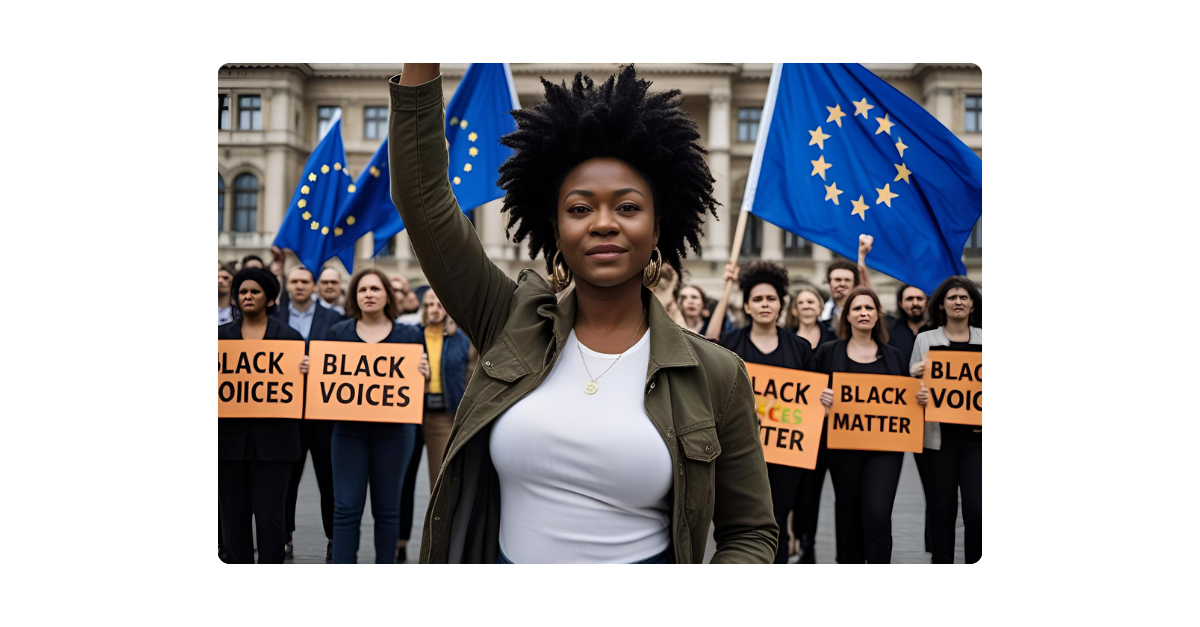
But entering these spaces is no small feat. European politics is still overwhelmingly white, male, and elite. Black politicians often face higher scrutiny, racist attacks, and are expected to “speak for all Black people” while navigating party loyalty and public expectations.
Yet, they persist. These leaders are proposing anti-discrimination laws, fighting racial profiling, defending refugee rights, and investing in marginalized communities. Their visibility challenges the notion that Europe’s future must be white-led.
Beyond elected office, activists are organizing grassroots movements that pressure governments to act. France’s Comité Justice et Vérité pour Adama, Germany’s Initiative Schwarze Menschen, and the UK’s Black Lives Matter movement are disrupting power structures.
Black political power in Europe is still growing, but it’s undeniable. The work ahead is to normalize Black leadership, not as a novelty, but necessity.
7. The Rise of Black-Owned Businesses
When systemic doors close, Black ingenuity builds new entrances. Across Europe, a new wave of Black-owned businesses is rising, rooted not just in survival but in empowerment, pride, and financial liberation.
From Afro-European fashion brands in Milan to natural skincare lines in Paris, tech consultancies in London, vegan food trucks in Brussels, and community bookstores in Amsterdam, Black entrepreneurs are carving out economic ecosystems that speak to identity and self-sufficiency.
But this rise doesn’t come without obstacles. Discriminatory lending practices, lack of representation in entrepreneurship networks, and biased gatekeeping in media and marketing spaces make it harder for Black entrepreneurs to scale. Many rely on community support, self-funding, or crowdfunding to break through.
Despite this, the resilience is evident. Social media has become a powerful equalizer, enabling direct-to-consumer sales and global visibility. Collaborative pop-ups, cultural festivals, and marketplace apps specifically for Black-owned brands have strengthened the movement.
Economic freedom is a form of protest. Every successful Black business is a rejection of the myth that Black communities are inherently dependent. And each euro earned and reinvested is a step toward long-term self-determination.
8. New Forms of Solidarity
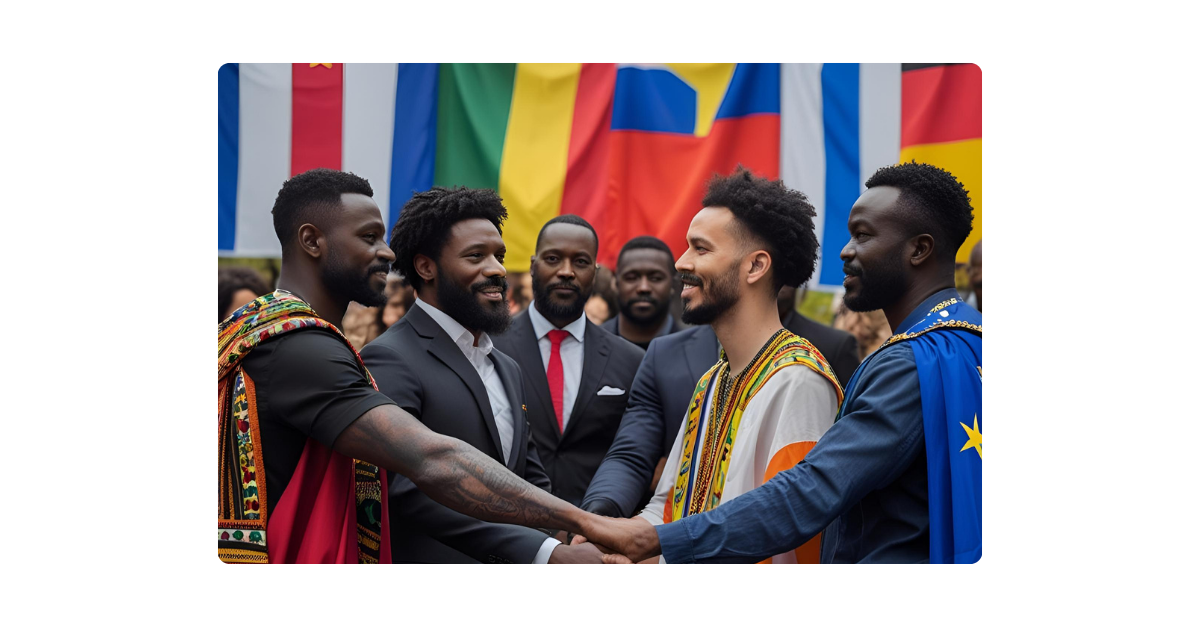
Though scattered across national lines, Black Europeans are forging a new kind of solidarity, one that is Pan-African in spirit, digital in connection, and fearless in intention. This unity transcends language and origin, linking Congolese activists in Brussels with Nigerian feminists in Berlin, Somali poets in Stockholm with Ghanaian chefs in Lisbon.
These networks are not based on nostalgia for the past, but on designing a collective future. They celebrate diasporic diversity, West African, Afro-Caribbean, East African, and Afro-Latino, and encourage cross-border collaboration. Social media platforms like X (formerly Twitter), Clubhouse, and Instagram Lives have become meeting rooms for this new Pan-African European consciousness.
From organizing continent-wide boycotts of racist brands to fundraising for asylum seekers in Italy, this solidarity is action-driven. And it’s cultural too: music festivals, film screenings, podcast collectives, and academic symposiums are building emotional bridges across European cities.
This form of unity is essential because racism doesn’t respect borders. It adapts. So Black resistance must be just as adaptable, just as global.
Conclusion: Reimagining a Europe Where Black Lives Truly Matter
The fight for Black lives in Europe is not just about correcting the past; it’s about reimagining the future. A future where Black people are not merely surviving, but thriving. Where culture, identity, history, and opportunity intersect to build societies that are truly inclusive.
Imagine a Europe where schoolbooks honor the Black Moors of Spain, the Haitian Revolution, and the contributions of African scholars. Where job applications do not prompt name-based biases. Where fashion runways reflect the full spectrum of beauty. Where Black languages and hairstyles are celebrated, not penalized.
This future also means structural change. It means reparative policies, racial equity in healthcare, inclusive education, and real consequences for racism in the public and private sectors. It’s not a utopia, it’s justice.
And most importantly, it means shifting the lens through which Black lives are viewed not as anomalies, not as burdens, but as architects of a better Europe.
This article is not a conclusion. It is a rallying cry. A blueprint. A mirror. A starting point. Let those who read it be provoked to act, to unlearn, and to rebuild. Because until Black lives in Europe are fully seen, heard, and protected, Europe cannot call itself whole.